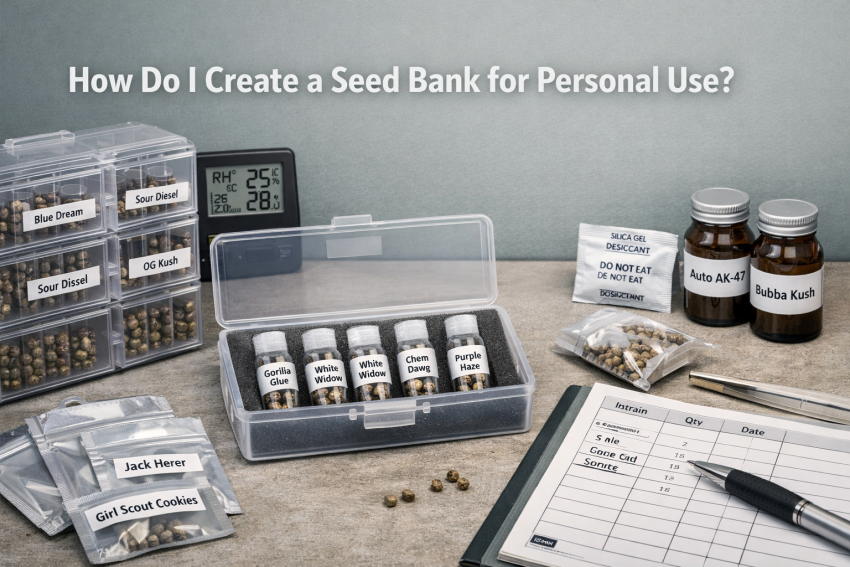
To create a seed bank for personal use, you need more than a container full of seeds. A useful personal seed bank is organized, labeled, protected from moisture and heat, and maintained with enough discipline that seeds stay identifiable and viable over time.
The advanced part is not simply collecting seeds, but building a system that protects genetics, preserves quality, and makes future use predictable.
What Is a Personal Seed Bank?
A personal seed bank is a structured collection of cannabis seeds stored for future growing, breeding, preservation, or backup planning. Unlike casual storage, a true seed bank emphasizes long-term viability, organization, and retrieval. That means every stored batch should be identifiable, protected, and easy to track.
If you only have a few seeds for near-term use, basic seed storage may be enough. A seed bank becomes more useful when you are managing multiple strains, preserving favorite genetics, or storing seeds for future breeding decisions.
What Should a Personal Seed Bank System Include?
- Clearly labeled seed batches
- A storage method that limits light, heat, and humidity
- A way to separate strains, generations, or breeders
- Basic records for origin, age, and storage date
- A plan for minimizing handling and temperature swings
- A routine for reviewing condition and organization over time
The more valuable the genetics, the more important the system becomes. A personal seed bank should protect both the seeds and the information attached to them.
How Should You Organize Cannabis Seeds for Long-Term Use?
1. Separate by strain or line
Never assume you will remember what is in an unlabeled packet later. Keep each batch isolated and clearly named from the start.
2. Record useful details
Include strain name, breeder or source, date stored, seed type, and any notes that will matter later. If you are preserving selections for future breeding, generation details become especially important.
3. Use durable labeling
Labels should survive storage conditions and remain readable after time passes. A personal seed bank fails quickly when identification becomes uncertain.
What Storage Conditions Work Best?
- Cool temperatures
- Low humidity
- No direct light exposure
- Stable conditions with minimal fluctuation
- Sealed containers with moisture control
The same rules that protect ordinary seed storage also apply to a seed bank, but the consequences of poor control are greater because a seed bank often holds multiple batches over a longer timeline.
What Containers and Materials Should You Use?
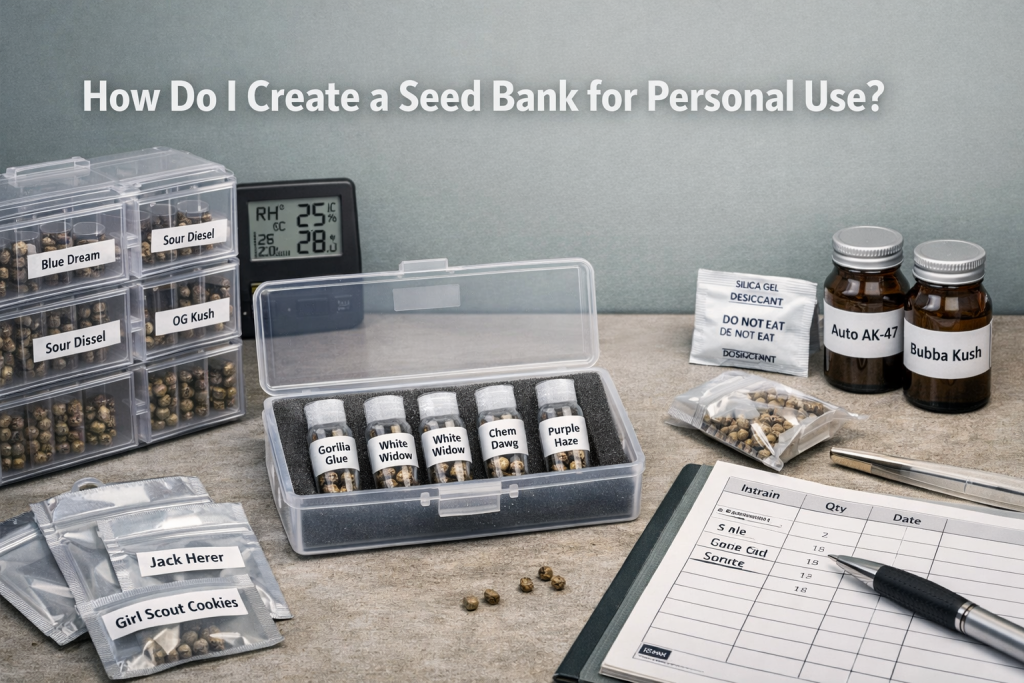
- Airtight containers, vials, or sealed storage tubes
- Secondary organization boxes or trays
- Desiccant packets to help manage moisture
- Written or digital inventory records
Advanced storage is less about buying exotic equipment and more about consistency. A simple, dry, well-labeled storage system is more valuable than a complicated one used carelessly.
How Do You Manage Viability Over Time?
A personal seed bank shouldn’t be ignored once it is built. As seeds age, viability gradually declines, even under good storage conditions. That is why it helps to rotate older stock forward, track storage dates, and avoid unnecessary disturbance. If a batch is especially important, consider testing a small sample before relying on it years later.
What Mistakes Ruin a Personal Seed Bank?
- Poor or inconsistent labeling
- Storing seeds in warm or humid environments
- Repeatedly opening containers and exposing seeds to moisture changes
- Mixing batches without clear records
- Keeping a collection without any inventory system
- Confusing collecting seeds with preserving genetics properly
The biggest failure point is usually not the seeds themselves. It is disorganization. Once the information around the seed is lost, part of the value of the seed bank is lost with it.
How Advanced Should a Home Seed Bank Be?
That depends on your goals. A grower preserving a few favorite lines for future use needs a simpler system than someone storing breeding stock, comparing phenotypes, or maintaining a long-term genetic library. The right setup is the one that matches the value of the material and the level of control you can actually maintain.
In Conclusion
A personal seed bank is really a storage and record-keeping system built to protect cannabis genetics over time. If you keep seeds cool, dry, dark, well labeled, and organized, even a modest home setup can function like a reliable long-term archive rather than a loose collection of forgotten packets.