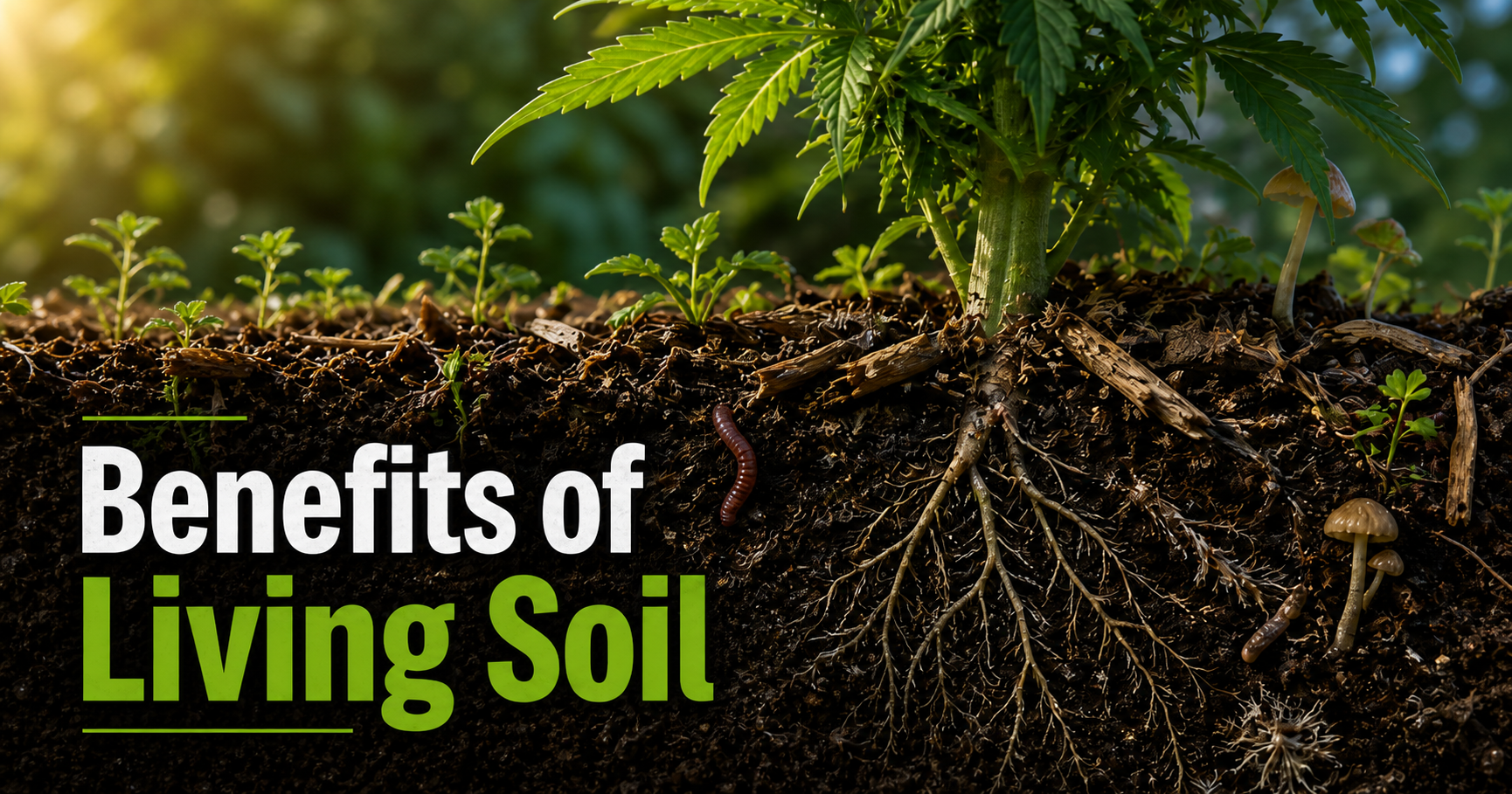
The main benefits of using living soil in cannabis growing are stronger biological activity, steadier nutrient cycling, better root-zone resilience, and a system that can support healthier plants with less dependence on constant bottled-input correction. For advanced growers, living soil isn’t just a media choice. It’s a cultivation approach built around feeding the soil food web so the plant can perform inside a more stable biological system.
What Is Living Soil in Cannabis Cultivation?
Living soil is a biologically active growing medium that contains organic matter, microbial life, and mineral inputs working together as a functional root environment. Instead of treating the medium like an inert container that must be corrected constantly from the outside, living soil treats the root zone as an ecosystem.
That ecosystem can include bacteria, fungi, organic amendments, decomposing matter, and a broader nutrient cycle that supports plant growth over time. The practical goal is to create conditions where the soil biology helps make nutrients available in a more buffered and biologically mediated way.
Why Do Advanced Growers Use Living Soil?
Advanced growers usually move toward living soil because it offers something that purely reactive feeding systems often struggle to provide: biological stability. When the soil is functioning well, the grower isn’t just pushing nutrients at the plant. They’re managing a system that can regulate moisture, nutrient access, and root-zone performance more intelligently.
That doesn’t mean living soil is simpler. It means the management logic changes. The grower has to think more in terms of system balance, observation, and long-term media health than quick correction alone.
What Are the Main Benefits of Living Soil for Cannabis?
1. More active nutrient cycling
In a functioning living-soil system, microbes and organic matter help convert nutrients into forms the plant can use over time. That can reduce the stop-start pattern that happens when a grow relies too heavily on constant correction rather than system support.
2. Better root-zone buffering
Living soil can create a more forgiving root environment than a thin, depleted, or biologically inactive medium. That matters because root stress often shows up later as nutrient, vigor, or moisture-management problems above ground.
3. Stronger microbial relationships
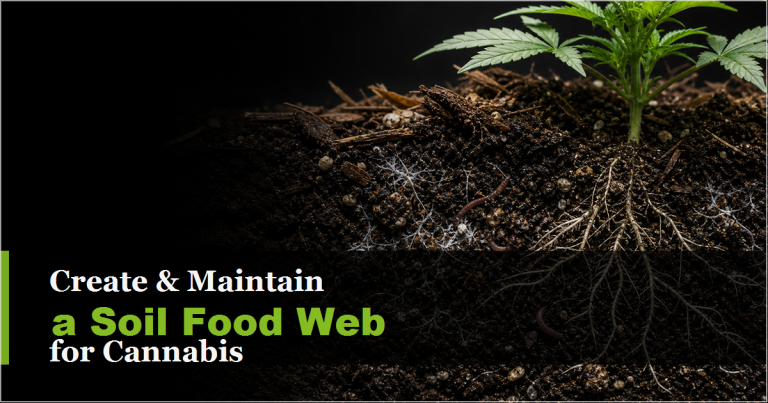
Healthy microbial life can support nutrient exchange, organic matter breakdown, and root-zone resilience. This is one reason advanced growers often connect living soil with broader topics like building a soil food web for cannabis.
4. Improved long-term soil performance
When managed properly, a living-soil bed or container can become more functional over time rather than starting from zero each cycle. That makes it attractive for growers who care about regenerative performance, consistency, and reduced system reset costs.
5. Potential gains in plant expression
Many growers value living soil because they believe it supports stronger expression in aroma, flavor, and overall plant quality when the environment is dialed in. That’s not just about adding amendments. It’s about whether the entire root ecology is functioning in a balanced way.
How Does Living Soil Change the Grower’s Job?
Living soil changes the job from direct-feeding management to ecosystem management. That means the grower has to watch moisture, biology, amendment timing, and media structure more carefully. It also means overcorrection can become a bigger problem, because aggressive intervention can disrupt the balance the system depends on.
- Watering practices matter more because moisture drives biological activity
- Top-dressing and amendment timing matter because inputs need time to integrate
- Compaction, poor aeration, or neglected structure can weaken the whole system
- Environmental control still matters because living soil isn’t a substitute for poor cultivation conditions
What Are the Limits of Living Soil?
Living soil is powerful, but it isn’t a magic fix. If the medium is built poorly, watered inconsistently, compacted, or stripped of biological activity, the promised benefits fall apart quickly. And if a grower expects instant correction the way they might in a more direct-feed system, frustration can set in fast.
- It usually takes more planning up front
- Diagnosis can be more nuanced than in simpler input-response systems
- Bad watering habits can undermine the biology
- Not every grow style or scale is suited to the same living-soil approach
So the benefits are real, but they depend on system quality and execution. Living soil rewards growers who think in processes, not shortcuts.
How Experienced Growers Usually Approach Living Soil
Experienced growers usually build living soil around a few core priorities: stable structure, active biology, disciplined watering, and measured amendment strategy. They don’t treat the medium as static. They treat it as a managed ecology that needs support, observation, and restraint.
That also explains why living-soil growers often care about related inputs such as compost, mulch, microbes, and biological inoculants. If you want to go deeper into that side of system building, it makes sense to compare this topic with compost teas in cannabis growing and the role of biologically active amendments in the root zone.
When Is Living Soil Most Worth It?
Living soil is most worth it when the grower wants deeper system control, values biological soil health, and is willing to manage the medium like a living process rather than a passive container. It tends to make the most sense for growers who are optimizing quality, sustainability, and long-term soil performance rather than chasing the fastest possible correction cycle.
Bottom Line
The biggest benefits of living soil in cannabis growing are biological stability, better nutrient cycling, improved root-zone function, and a cultivation system that can become more resilient over time when it’s managed well. For advanced growers, the appeal isn’t just that living soil can grow cannabis. It’s that it can support a more integrated and sustainable way to grow it.
2 responses