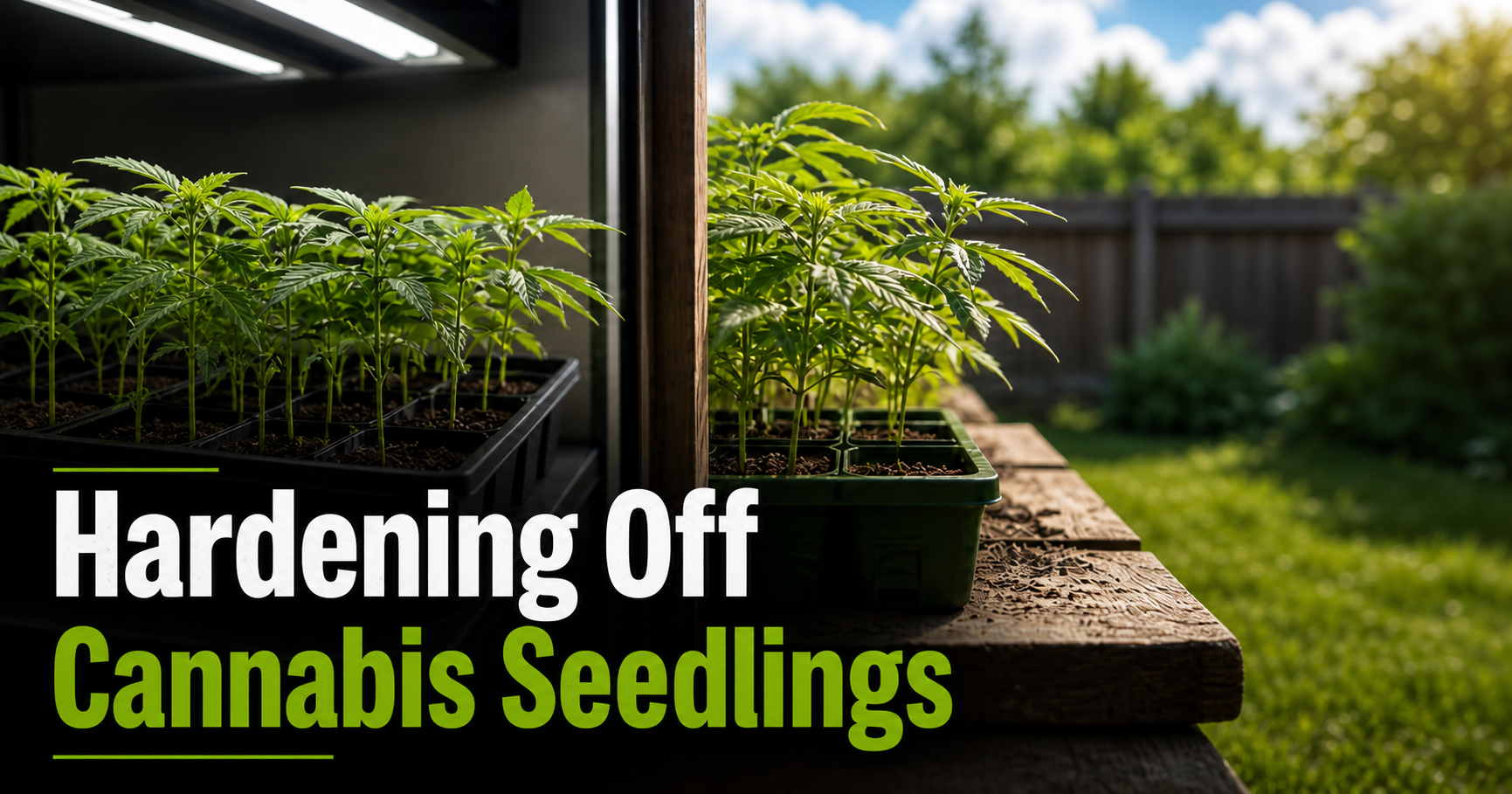
The safest way to harden off cannabis seedlings is to introduce outdoor sun, wind, and temperature changes gradually over about a week, adjusting the pace to the plant and weather. Start with brief exposure in mild shade, increase the time and light in stages, and slow down if leaves bleach, wilt badly, or stop recovering.
Why Seedlings Need the Transition
Seedlings raised indoors are accustomed to controlled light, limited air movement, and smaller temperature changes. Outdoor sunlight is much stronger, wind increases water loss, and weather can shift quickly. Hardening off gives the plant time to adjust its leaf protection, stems, and water use before it has to handle full outdoor conditions.
Begin with a stable plant. A good seedling care schedule can help you confirm that growth, watering, and light are already steady before adding another stress.
When to Begin
Start after the seedling has developed true leaves, is growing consistently, and can be moved without disturbing a fragile new root system. Delay the process if the plant is recovering from overwatering, transplant stress, nutrient trouble, or weak stretched growth.
A Practical Seven-Day Progression
Days 1 and 2: Mild Conditions
Give the seedlings a short period outdoors in bright shade or gentle early light with limited wind. Bring them back inside before they show sustained stress.
Days 3 and 4: More Time and Light
Increase outdoor time and introduce some direct morning sun. Check the medium because wind and stronger light can change the watering rhythm quickly.
Days 5 Through 7: Build Toward the Final Site
Move toward longer exposure and conditions closer to the planting location. Don’t force the schedule during a heat wave, cold snap, storm, or unusually windy period. The calendar is a guide; the plant’s recovery is the test.
How to Read the Plant
- Mild temporary droop: shorten the next exposure and check moisture.
- Bleached or pale patches: reduce direct sun and rebuild exposure more slowly.
- Fast drying: protect from strong wind and adjust watering without keeping the root zone saturated.
- Broken or badly bent stems: provide shelter and wait for steadier growth.
- Normal posture and new growth: the seedling is adapting and can usually progress.
Avoid Stacking Major Stresses
Whenever possible, don’t combine the first full-sun exposure, transplanting, strong feeding, pruning, and an unusually hot day. Spacing those changes makes it easier to tell what the plant is responding to and gives it time to recover.
If you’re deciding whether to raise seedlings first or sow outdoors where they will finish, compare this transition with the tradeoffs of direct planting cannabis seeds outdoors. Direct planting avoids transplant shock but gives you less control during germination and early growth.
When the Seedling Is Ready
A hardened seedling can spend the intended outdoor period without persistent wilting, bleaching, or a long recovery afterward. Its water use should be predictable, the stem should tolerate normal airflow, and new growth should continue. If the final location is harsher than the test area, keep progressing toward that specific exposure before planting.
Bottom Line
Hardening off isn’t about following seven days mechanically. It’s about letting a healthy seedling adapt to stronger light, wind, and temperature changes without overwhelming it. Increase exposure gradually, watch recovery, and let actual weather determine how quickly you move.