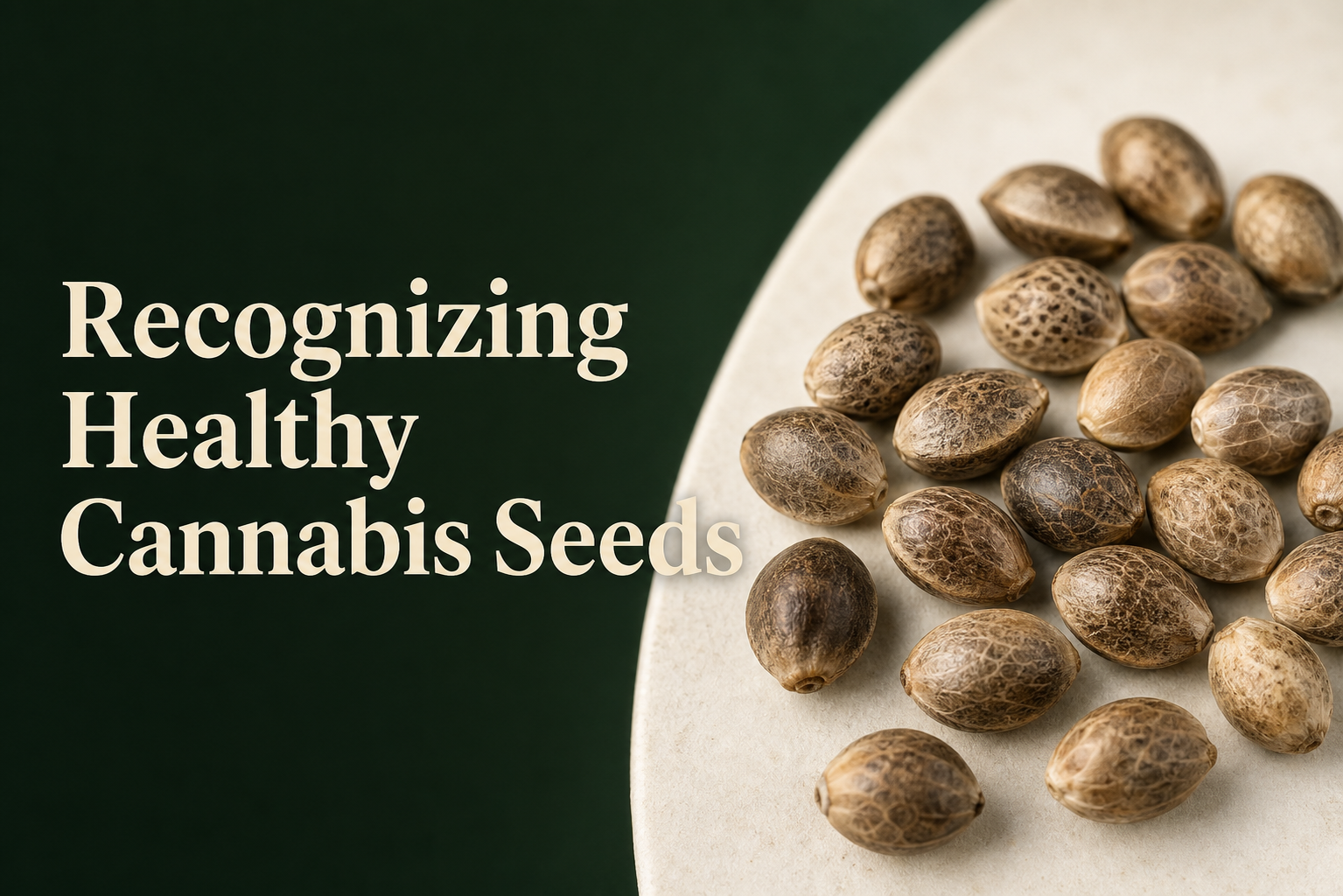
Healthy cannabis seeds are usually mature, intact, firm, and dry, but appearance alone can't tell you whether they'll germinate. Color and markings vary by cultivar [g], so the best assessment combines physical condition, storage history, age, and a careful germination [g] test.
What Healthy Cannabis Seeds Usually Look Like
A mature cannabis seed commonly has a hard outer shell in shades of tan, brown, gray, or nearly black. Some seeds have mottled or striped patterns, while others are fairly uniform. Those markings aren't a reliable measure of genetics or potency.
When you're checking a seed, look for:
- An intact shell without cracks, holes, or crushed areas
- A dry surface without fuzzy growth, slime, or an unusual odor
- A firm feel under gentle handling
- A plump, well-formed shape rather than a flat or badly misshapen shell
Very pale or green seeds are often immature, but color isn't an absolute rule. Some viable seeds are lighter than expected, and some dark, attractive seeds are no longer viable.
What the Shell Can't Tell You
You can't identify sex, cannabinoid [g] profile, cultivar, or final plant quality by looking at a seed. A healthy-looking shell only tells you that the seed appears mature and undamaged.
The seed's source matters more than its appearance. Properly labeled seeds from a documented breeding line provide more useful information than shell pattern or size. For example, CBD-rich cannabis seeds are defined by their genetics, not by a visible seed trait.
Check Storage History and Age
Heat, moisture, and repeated temperature changes can reduce viability without leaving clear marks on the shell. If your seeds have been kept cool, dark, and dry, they're more likely to remain usable. If you're holding seeds for future seasons, follow a consistent long-term seed storage method and label the container with the cultivar and storage date.
Age doesn't automatically make a seed unusable, but older seeds may germinate more slowly or less consistently. Starting a few more seeds than the number of plants you need can account for normal variation; the guide on how many cannabis seeds to plant explains that planning step.
Use Germination as the Practical Test
The most reliable way to check viability is to germinate the seeds under stable conditions. Use clean materials, keep your medium moist rather than saturated, and resist the urge to dig up or squeeze a seed while it's absorbing water.
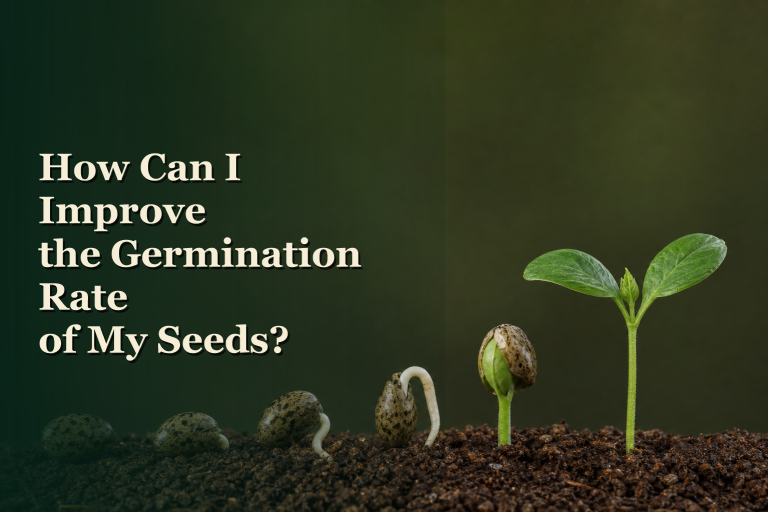
Many viable seeds germinate within a few days, though age and conditions affect the timing. Review how long cannabis seeds take to germinate before deciding that a slow seed has failed.
Bottom Line
A healthy seed should be mature, firm, dry, and free of obvious damage, but no visual checklist can guarantee germination. Treat appearance as a first screening step, then rely on storage records, a reputable source, and a controlled germination test to judge seed viability [g].