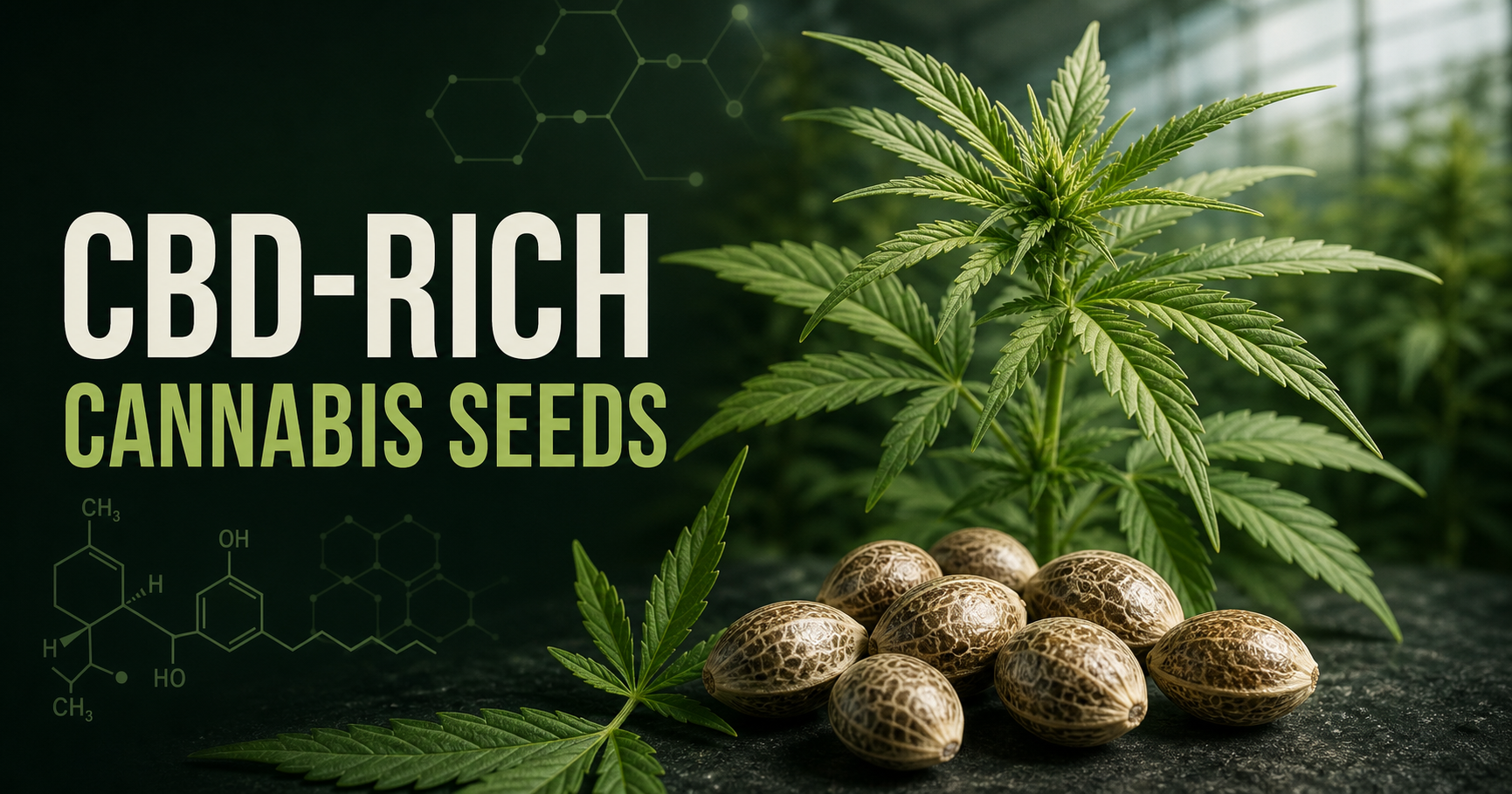
CBD-rich cannabis seeds are seeds bred to produce plants with a cannabinoid profile that favors cannabidiol (CBD), usually with less tetrahydrocannabinol (THC) than conventional high-THC cultivars. The label describes the plant’s expected chemistry, not how the seed looks, so reliable breeder data and later laboratory testing matter more than color, size, or shell pattern.
What Makes a Cannabis Seed CBD-Rich?
A seed is considered CBD-rich because of the genetics it carries. Those genetics influence the plant’s cannabinoid synthase enzymes, which help determine whether the flowers accumulate mostly CBD, mostly THC, or a more balanced ratio.
The seed itself doesn’t contain a finished flower’s cannabinoid profile, and you can’t verify CBD potential by inspecting it. A trustworthy seed description should identify the expected CBD and THC ranges, the approximate ratio, and whether the figures come from repeated testing across multiple plants.
CBD-Dominant and Balanced Ratios
CBD-rich cultivars don’t all produce the same type of plant. Common categories include:
- CBD-dominant: CBD substantially exceeds THC
- Balanced: CBD and THC occur in a roughly 1:1 or similar ratio
- Low-THC hemp-type: CBD is emphasized while THC is bred to remain below a legal threshold
These aren’t interchangeable. A balanced plant can still produce a meaningful amount of THC, while a CBD-dominant plant may still contain more THC than a regulated hemp limit allows. Check local law before germinating or growing any cannabis seed, because seed possession, cultivation, and finished-plant limits vary by jurisdiction.
How CBD-Rich Genetics Work
Cannabis plants inherit versions of genes associated with cannabinoid production from both parents. Breeders select parents with desirable CBD-to-THC ratios, grow their offspring, test the resulting flowers, and repeat the process until the trait becomes reasonably consistent.
That process is why a stable line matters. One impressive laboratory result doesn’t prove every seed in a batch will behave the same way, and growers should treat an advertised percentage as a useful range rather than a promise for every plant.
What to Look for When Choosing CBD-Rich Seeds
Clear cannabinoid data
Look for expected CBD and THC ranges instead of a vague "high CBD" claim. A ratio such as 20:1 is more informative than a single percentage because it describes the relationship between the two cannabinoids.
Stable breeding history
Established lines should show relatively consistent traits across multiple plants. Ask whether the cultivar is stabilized, which generation is being sold, and how much variation a grower should expect.
Appropriate seed type
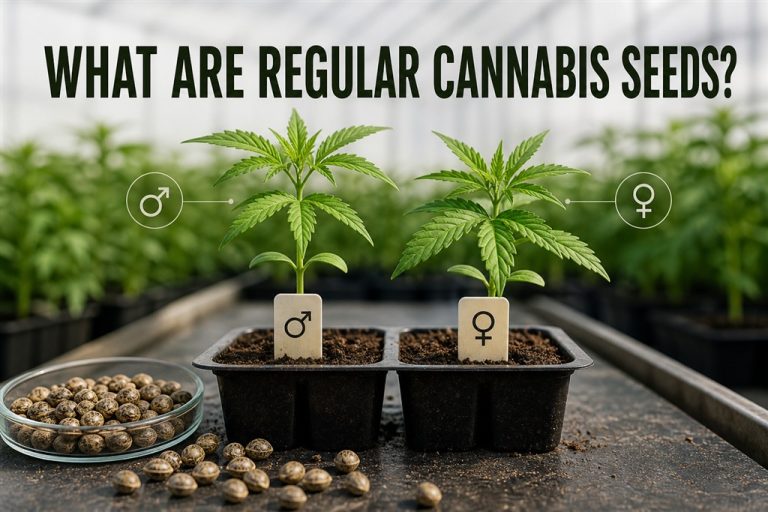
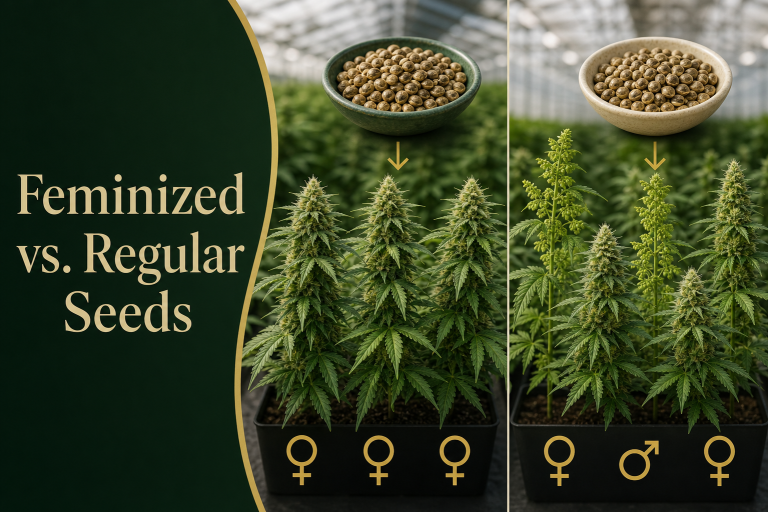
CBD-rich genetics may be sold as regular, feminized, or autoflowering seeds, but the format doesn’t tell you whether the line is stable. Before choosing a pack, work backward from the available space and decide how many cannabis seeds you can realistically plant, monitor, and finish well.
Independent or repeated testing
Certificates of analysis are most useful when they represent several plants, several harvests, or multiple lots. One selected sample can show potential, but it doesn’t describe the full range of expression in a seed population.
Can Environment Change the CBD Level?
Genetics sets the potential, but the growing environment affects how fully that potential is expressed. Light intensity, temperature, root health, nutrition, harvest timing, and plant stress can all influence final cannabinoid concentration and yield.
Environment generally won’t turn a genetically THC-dominant plant into a reliably CBD-dominant one. It can, however, cause two plants from the same seed line to finish with different percentages. This is one reason growers should evaluate both the ratio and the total flower performance rather than chasing a single advertised number.
Common Misunderstandings
- A striped or dark seed isn’t automatically CBD-rich
- "CBD-rich" doesn’t always mean THC-free
- A cultivar name alone doesn’t guarantee a cannabinoid profile
- Hemp compliance can’t be confirmed from seed packaging alone
- CBD-rich plants still need normal germination, nutrition, light, airflow, and pest management
Good storage protects the genetics you paid for, even though it can’t improve weak breeding. If a pack won’t be planted right away, follow the same cool, dark, dry conditions used for long-term cannabis seed storage.
Bottom Line
CBD-rich cannabis seeds carry genetics selected to produce CBD-dominant or CBD-balanced plants, but the label should be supported by a stable breeding history and meaningful test data. Choose seeds by expected CBD-to-THC ratio, legal fit, seed type, and breeder transparency, then confirm the finished plant through compliant laboratory testing when precision matters.
4 responses