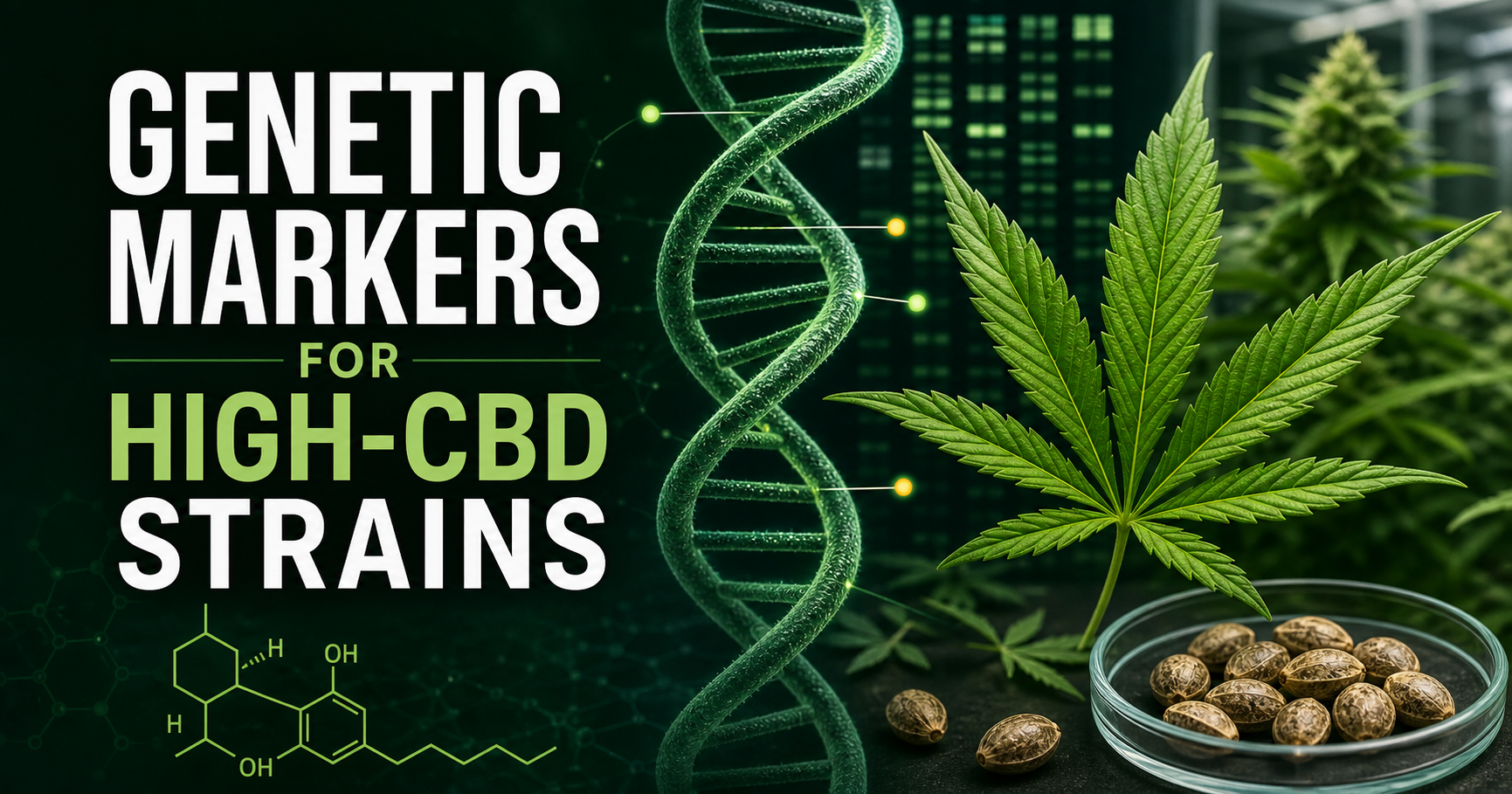
The most useful genetic markers for identifying a likely high-CBD cannabis chemotype are linked to the cannabinoid synthase region, especially CBDAS and THCAS. These markers can help breeders screen seedlings for CBD-dominant, mixed, or THC-dominant potential, but they don’t tell you the plant’s final CBD percentage. You still need a validated assay and chemical testing of mature plant material to confirm the result.
Start With Chemotype, Not a Marketing Label
A high-CBD plant is commonly described as a Type III chemotype, meaning it produces substantially more CBDA than THCA before heating or processing. Type II plants produce a more balanced mix, while Type I plants are THCA-dominant. The seed shell can’t reveal any of these outcomes.
If you’re deciding what to grow rather than designing a breeding program, breeder records and verified cannabinoid test results are usually more useful than trying to interpret a marker yourself. The overview of CBD-rich cannabis seeds explains what those labels can and can’t promise.
Why CBDAS and THCAS Matter
CBDAS and THCAS encode enzymes involved in converting the shared precursor CBGA into CBDA and THCA. Differences around these synthase genes are strongly associated with cannabinoid ratio, which is why many marker systems target them or nearby DNA. That inherited marker pattern is part of the plant’s genotype, while the cannabinoid profile measured after growth is part of the expressed phenotype.
Research has also shown that the synthase region is structurally complex and repetitive. A physical and genetic map of cannabis found extensive rearrangement around the THCAS and CBDAS loci. That complexity helps explain why a marker that performs well in one breeding population may be less reliable in unrelated material.
What Marker Results Can Tell You
- Whether a seedling carries marker patterns associated with CBD-dominant, mixed, or THC-dominant chemotypes
- Which seedlings are more useful to retain when a breeding program has a defined cannabinoid-ratio target
- Which plants can be deprioritized before the breeder spends a full season growing and testing them
- Whether a cross is segregating in the direction the breeder expected
Recent PCR research targeting THCAS and CBDAS has shown strong chemotype prediction within the material tested, while other studies have found that published markers don’t perform equally across every genetic background. The useful conclusion isn’t that genetic testing is unreliable. It’s that the assay must be validated for the population and decision you’re making.
What Genetic Markers Can’t Tell You
- The exact percentage of CBD the mature flowers will contain
- Whether the plant will meet a particular legal THC threshold
- Yield, aroma, flowering time, disease resistance, or overall plant quality
- How strongly the environment will affect cannabinoid production
- Whether a commercial seed lot is uniform without representative testing and records
Chemotype markers are selection tools, not complete cultivar profiles. Whole-genome variation, other biosynthetic genes, genetic background, cultivation conditions, harvest timing, and laboratory methods can all matter to the phenotype you eventually measure.
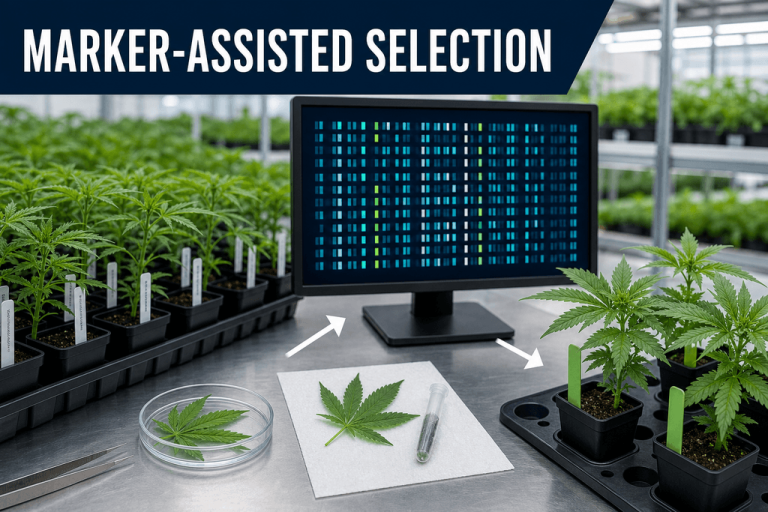
A Practical Marker-Assisted Selection Workflow
- Define the target. Decide whether you need a CBD-dominant Type III plant, a balanced Type II plant, or a specific regulatory outcome.
- Choose documented parents. Use plants with reliable identity, breeding history, and chemical test results.
- Select a validated assay. Confirm which loci the test examines, which populations support its interpretation, and what its error limits are.
- Screen seedlings consistently. Label every sample and preserve the chain between the tissue sample and the living plant.
- Retain candidates, not conclusions. Use the marker result to narrow the population rather than declaring a final cannabinoid profile.
- Confirm with chemical testing. Test mature representative flowers through an appropriate laboratory before making potency, compliance, or sales claims.
How to Evaluate a Testing Service
Ask which markers are tested, how the assay was validated, what reference populations were used, and whether the result predicts a ratio class or a specific concentration. A useful report should state its limits clearly. Be cautious if a service claims that one seedling test can guarantee final CBD percentage or legal compliance.
For a deeper look at why marker performance can vary, research comparing cannabinoid profiles and published THCAS/CBDAS markers found that accuracy changed with genetic background. That study is available in Plants.
Bottom Line
CBDAS- and THCAS-linked markers can help you identify plants that are more likely to express a CBD-dominant chemotype, especially inside a defined breeding population. Use them to make earlier, better-informed selections, but keep the promise bounded: markers predict genetic potential, while mature-flower testing confirms what the plant actually produced.
2 responses