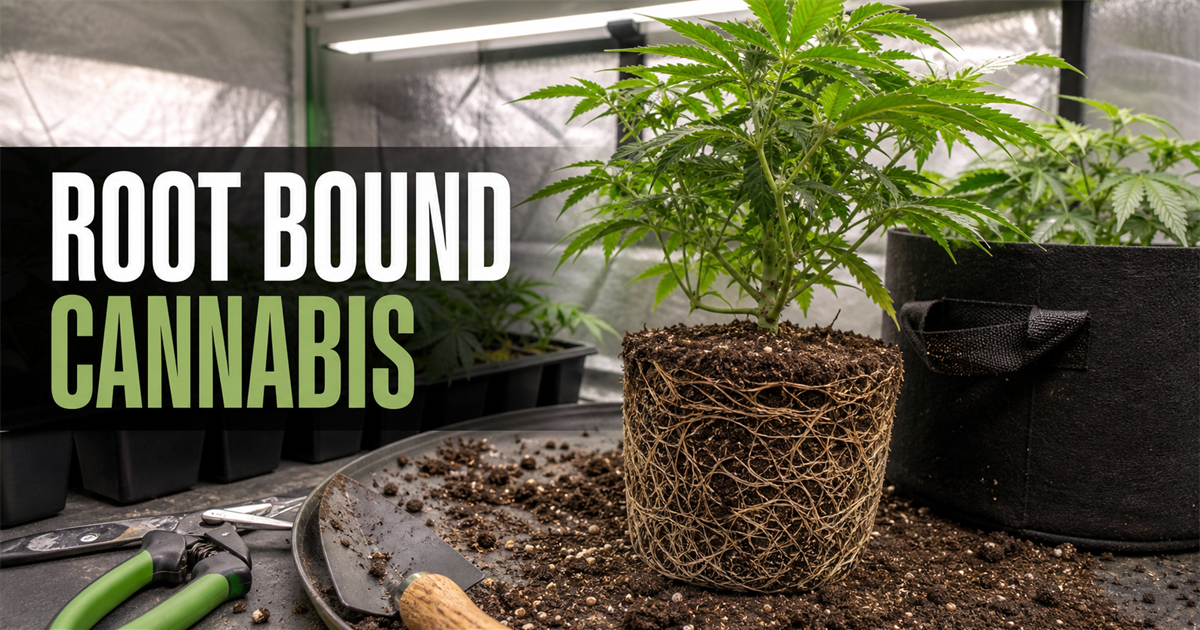
To prevent and treat root bound cannabis plants, choose the right container size, transplant before roots circle tightly, watch watering behavior, and correct severe cases by moving the plant into a larger pot with a better root environment. Root bound plants can survive for a while, but restricted roots eventually limit water uptake, nutrient access, growth rate, and overall plant resilience.
What Does Root Bound Mean?
A plant becomes root bound when its roots fill the container so densely that they begin circling the pot, matting together, or running out of usable space. In cannabis cultivation, this usually happens when a plant stays too long in a small container during active growth.
Root restriction isn’t only a space problem. Once the container is crowded, the medium may dry out faster, drainage may become uneven, and the plant may respond as if it has a feeding or watering issue. If the symptoms are confusing, compare the root-zone clues with the broader signs of a healthy cannabis plant before making a correction.
Common Signs of a Root Bound Cannabis Plant
- Roots circling the bottom or sides of the container
- Water running through the pot very quickly
- The plant wilting soon after watering
- Slower growth despite reasonable light and nutrition
- Frequent dry-downs that become hard to manage
- Deficiency-like symptoms that don’t improve after normal feeding adjustments
These signs can overlap with other problems, so don’t diagnose root bound from one symptom alone. The strongest confirmation comes from checking the root ball or noticing that the container dries much faster than it used to.
Why Root Bound Plants Struggle
Roots need space, oxygen, and access to a balanced medium. When the container is packed with roots, water and nutrients may not move through the medium evenly. The plant can have enough input on paper but still struggle to use it because the root zone is physically restricted.
Container crowding can also make drainage problems harder to read. A pot may shed water quickly along the sides while some inner areas remain dense or dry. If water behavior is part of the issue, review soil drainage for cannabis plants before assuming fertilizer is the missing piece.
How to Prevent Root Bound Plants
Choose containers by growth stage
Start plants in a container that matches their current size, then transplant before growth stalls. A tiny seedling in a huge container can make watering behavior harder to read, but a vigorous plant left too long in a small pot can become restricted quickly.
Track dry-down speed
When a plant that used to hold moisture comfortably starts drying out much faster, the root mass may be filling the container. Fast dry-downs aren’t automatically bad, but they’re a signal to check whether the plant has enough medium left to support steady growth.
Transplant before flowering when possible
Transplanting cannabis is usually easier during vegetative growth than during flowering. If the plant is about to stretch and build a heavier canopy, give the roots room before the demand increases. Late transplants can still work, but they carry more stress and timing risk.
How to Treat a Root Bound Cannabis Plant
1. Confirm the root condition
Slide the root ball out gently if the plant is in a container where that’s practical. Look for roots circling heavily around the outside, a dense white mat at the bottom, or a root ball that holds the exact shape of the pot with little loose medium.
2. Move into a larger container
The most common treatment is transplanting into a larger pot with fresh, well-aerated medium. Water the new medium carefully so roots are encouraged to move outward instead of staying trapped in the old shape.
3. Loosen only when necessary
If roots are lightly circling, gentle handling may be enough. If the root ball is severely matted, lightly teasing the outer layer can help new roots explore the fresh medium. Be careful: aggressive tearing can shock the plant more than the restriction itself.
4. Stabilize after transplanting
After transplanting, avoid changing several things at once. Keep light intensity, feeding, and watering steady while the plant re-establishes. If the plant was showing deficiency-like symptoms, give the roots time to recover before making large nutrient corrections.
Root Bound or Nutrient Problem?
Root restriction can look like a nutrient issue because the plant may show yellowing, fading, slowed growth, or inconsistent uptake. The difference is that root bound symptoms often appear alongside a physical container clue: fast dry-down, circling roots, or a plant that seems too large for its pot.
If the roots have space but the symptoms still point toward feeding trouble, then the problem may be chemical rather than physical. In that case, testing root-zone conditions such as soil pH for cannabis plants can keep the diagnosis from drifting into guesswork.
Common Mistakes to Avoid
- Waiting until flowering to correct an obvious container-size problem
- Feeding more when the plant actually needs root space
- Transplanting into dense or poorly drained media
- Breaking apart a root ball too aggressively
- Ignoring rapid dry-down as the plant increases in size
Key Takeaways
Root bound cannabis plants are best prevented with timely transplanting, containers that match the growth stage, and close attention to watering behavior. To treat root bound plants, confirm the root restriction, move into a better-sized container, protect the plant from extra stress, and let the new root zone stabilize before making other major corrections.