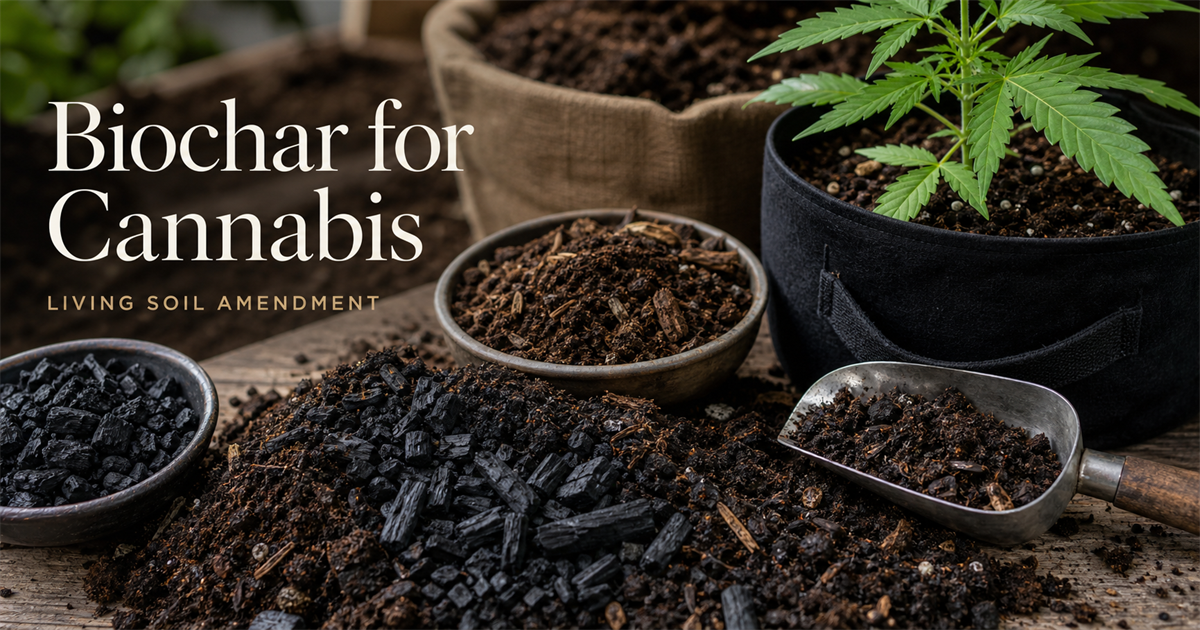
To use biochar in cannabis cultivation, charge it with compost, nutrients, or biologically active inputs before mixing it into soil, then apply it as part of a balanced living medium rather than as a standalone fix. Biochar can improve habitat, structure, and nutrient-holding capacity, but raw or overused biochar can temporarily tie up nutrients and create more problems than it solves.
What Is Biochar?
Biochar is a carbon-rich material made by heating organic matter in a low-oxygen environment. In soil, its value comes from its porous structure and long-term stability. Those pores can provide habitat for microbes, hold moisture and nutrients, and contribute to a more resilient root-zone environment when the material is prepared correctly.
Biochar makes the most sense when the grower is already thinking about soil as a living system. If the goal is to improve biological function over multiple cycles, it fits naturally alongside living soil practices instead of quick input-response feeding.
Why Cannabis Growers Use Biochar
- It can improve soil structure and aeration when used in the right amount
- It can help hold nutrients in the root zone
- It can provide habitat for beneficial microbes
- It can support long-term soil reuse and amendment strategies
- It can improve buffering in biologically managed media
The important phrase is “can improve.” Biochar isn’t automatically beneficial just because it’s carbon-rich. Its effect depends on source material, particle size, charging method, application rate, and the rest of the soil recipe.
Charge Biochar Before Using It
Charging biochar means pre-loading it with nutrients, organic matter, and microbial life before it goes into the growing medium. Raw biochar can act like an empty sponge. If it’s mixed directly into a cannabis root zone, it may pull nutrients from the surrounding soil until it reaches equilibrium.
Charging can be done by blending biochar with finished compost, worm castings, compost tea, nutrient solution, or a mature living soil mix and letting it sit before use. Compost teas are most useful here when they support an actual habitat; the article on compost teas in cannabis growing is a good next step if the goal is microbial support rather than just adding another liquid product.
How Much Biochar Should You Add?
Use biochar conservatively, especially when changing an existing soil mix. Advanced growers often test small batches before scaling the amendment across a full grow. Too much biochar can alter drainage, nutrient behavior, pH behavior, and moisture retention in ways that are difficult to reverse mid-cycle.
Treat biochar as one ingredient in the soil mix. It should work with compost, aeration, minerals, and organic matter rather than replacing them. If the soil is already dense or waterlogged, biochar alone won’t fix the whole physical structure.
Where Biochar Fits in the Soil System
Biochar is strongest when it supports the broader soil food web for cannabis. Its pores can become microbial habitat, but only if the soil also provides moisture, oxygen, carbon, minerals, and root activity. Without those conditions, biochar is just another inert amendment sitting in the medium.
Plan how biochar will work with the rest of your soil mix. It can help stabilize a living medium over time, but the plant still needs correct watering, soil structure, and balanced amendments.
How to Apply Biochar
1. Choose a clean, horticultural biochar
Use biochar intended for soil use. Avoid ash-heavy, contaminated, or unknown material. Particle size should be workable in a potting mix: not all powder, not only large chunks.
2. Charge it before planting
Blend the biochar with compost, worm castings, or another biologically active material and allow time for the pores to load with nutrients and biology. This step reduces the risk of short-term nutrient drawdown.
3. Mix evenly through the medium
Uneven pockets of biochar can create inconsistent moisture and nutrient zones. Mix it thoroughly into the soil rather than dumping it into one layer unless you’re testing a very specific soil-building approach.
4. Observe the next cycle
Biochar is a long-term amendment, so evaluate it across plant response, dry-down behavior, root growth, and soil reuse. Keep notes on the amount used and how the medium behaved compared with previous cycles.
Common Biochar Mistakes
- Adding raw biochar directly to a sensitive root zone
- Using too much at once
- Ignoring particle size and ending up with dust or oversized chunks
- Expecting biochar to fix poor drainage by itself
- Treating biochar like fertilizer instead of habitat and structure
If the soil already drains poorly, solve the physical problem first. Biochar can support structure, but a compacted mix still needs proper aeration and water movement. The practical warning signs are covered in the guide to improving soil drainage for cannabis plants.
Bottom Line
Biochar can be a valuable cannabis soil amendment when it is clean, charged, used conservatively, and integrated into a living soil strategy. Its real value isn’t instant feeding. It’s the way it can improve habitat, buffering, and long-term soil function when the rest of the root-zone system is already being managed well.