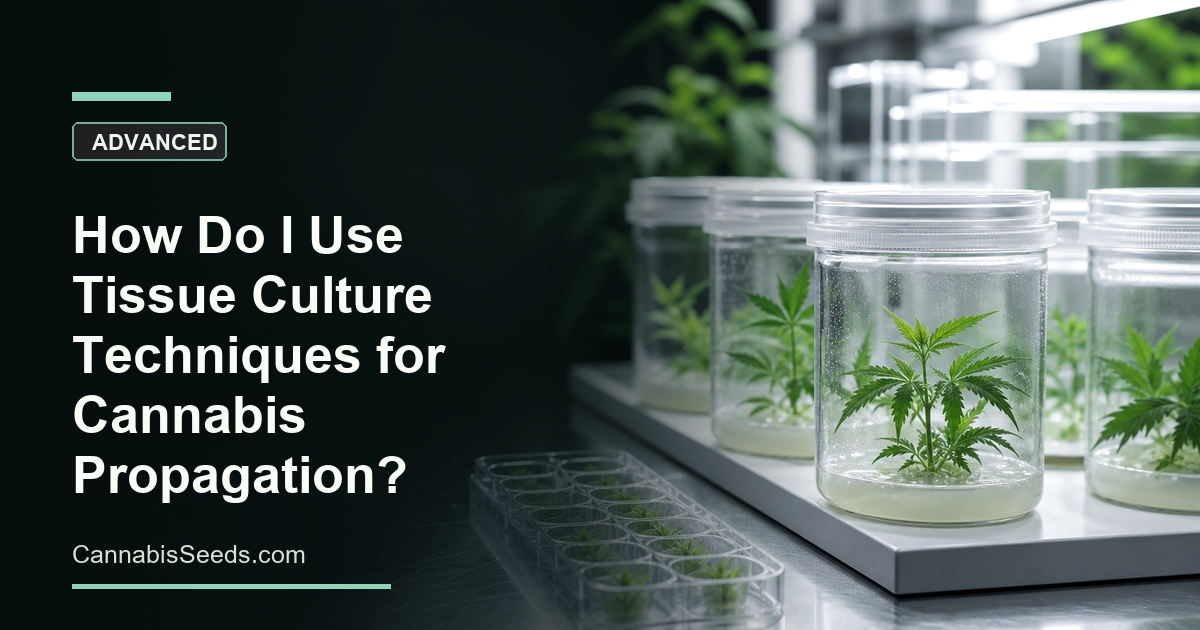
Using tissue culture for cannabis propagation means placing a small, carefully prepared piece of plant tissue into sterile culture, multiplying clean shoots, rooting the plantlets, and gradually adapting them to normal growing conditions. It can preserve selected genetics and reduce the space needed for mother plants, but it requires sterile equipment, a validated protocol, and enough recordkeeping to trace every culture back to its source.
What Tissue Culture Is Good For
- Preserving a selected genotype in a compact format
- Producing many genetically similar plants from limited source material
- Supporting cleaner stock programs when pathogen testing and sanitation are built into the process
- Reducing dependence on a large room of continuously maintained mother plants
- Keeping breeding and production material organized and traceable
Tissue culture doesn’t automatically make a plant pathogen-free, genetically stable, or true to its label. Those outcomes depend on the source plant, the culture pathway, testing, protocol control, and accurate records.
What You Need Before You Start
- A healthy, correctly identified donor plant
- A controlled clean-work area, often including a laminar-flow hood
- Sterilized tools, vessels, and prepared culture media
- A way to control light, temperature, and culture timing
- A labeling and record system that follows every explant and transfer
- A plan for rooting and acclimatizing plantlets outside the vessel
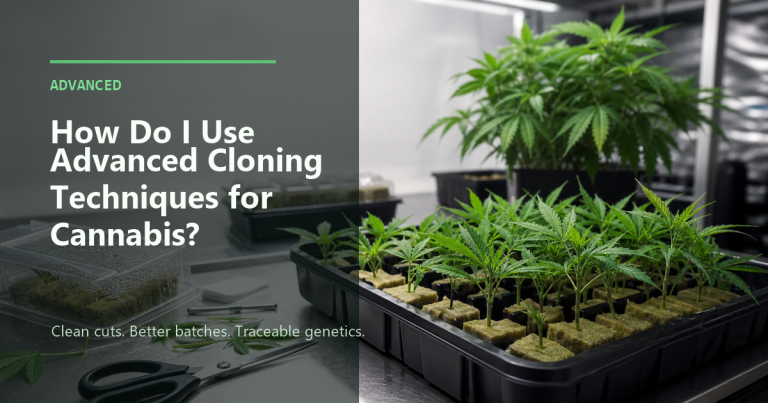
If you’re still learning ordinary cutting propagation, start there. The article on advanced cannabis cloning covers source-plant quality, sanitation, rooting conditions, and batch control without requiring an in-vitro laboratory.
The Basic Cannabis Tissue Culture Workflow
1. Select and Document the Donor Plant
Choose vigorous material with a known identity and a reason worth preserving. Record the cultivar or accession, source, health observations, and collection date before cutting any tissue.
2. Prepare the Explant
An explant is the small piece of tissue used to begin the culture. Nodal sections and shoot tips are common starting points. Surface disinfection must reduce contamination without damaging the tissue so severely that it can’t establish.
3. Establish a Clean Culture
Place the prepared explant into sterile medium and observe it for survival, contamination, and new growth. Don’t multiply material merely because it remains green; confirm that it is growing normally and that contamination isn’t appearing over time.
4. Multiply and Transfer Shoots
Healthy shoots are transferred at planned intervals to fresh medium. Cannabis genotypes can respond differently to the same plant-growth regulators and conditions, so treat any published recipe as a starting protocol that needs validation rather than a universal formula.
5. Root the Plantlets
Move suitable shoots into a rooting stage or an ex-vitro rooting process supported by your protocol. Track rooting rate and plant quality, not only the number of shoots produced.
6. Acclimatize Gradually
Plantlets formed in sealed, humid vessels aren’t ready for ordinary grow-room conditions. Transition them gradually to a suitable medium, lower humidity, stronger airflow, and normal light while monitoring survival and new growth.
Where Beginners Usually Run Into Trouble
- Starting with contaminated or stressed donor plants
- Treating a clean-looking vessel as proof that the culture is pathogen-free
- Using one medium recipe across unrelated genotypes without testing
- Losing plant identity during repeated transfers
- Multiplying abnormal or declining shoots because the batch count looks good
- Moving plantlets out of culture before they can tolerate the transition
How to Decide Whether Tissue Culture Is Worth It
Tissue culture makes the most sense when the genetics are valuable enough to justify the clean space, equipment, training, testing, and recordkeeping. If you need only a small number of plants from an easily replaced mother, conventional cuttings may be simpler and more reliable. If you need compact preservation, repeated multiplication, or a controlled clean-stock system, tissue culture may be worth developing.
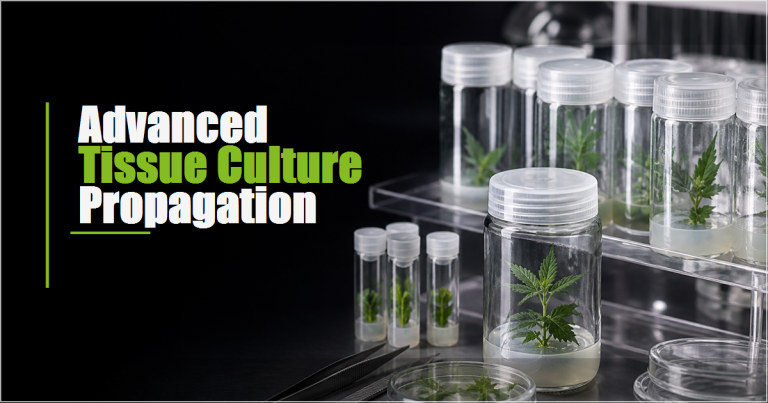
A peer-reviewed review of medical cannabis and industrial hemp tissue culture describes both the potential and the genotype-dependent limitations of current protocols. Once you understand the basic workflow, the site’s advanced tissue-culture article explains how to validate and manage a repeatable program.
Bottom Line
To use tissue culture successfully, begin with valuable, documented donor material and treat sterility, labeling, stage control, and acclimatization as one connected system. The goal isn’t merely to keep tissue alive in a vessel. It’s to recover healthy, correctly identified plants through a process you can repeat and trust.
4 responses