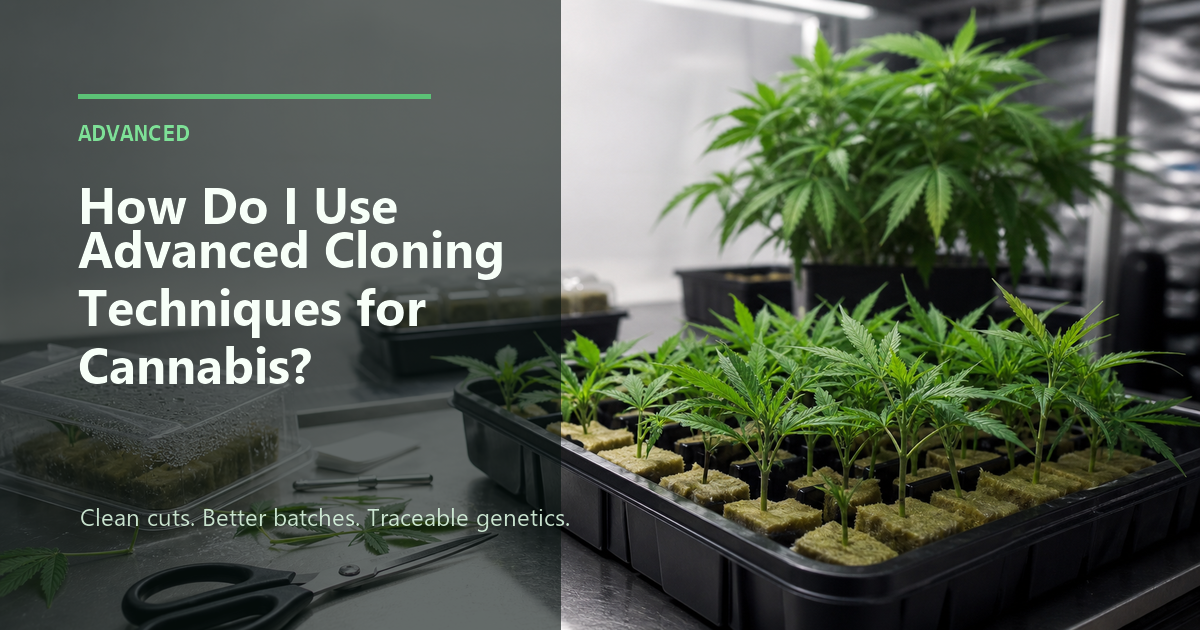
Using advanced cloning techniques for cannabis means treating propagation as a controlled system instead of a casual cutting routine. Experienced growers refine mother selection, cutting quality, sanitation, rooting conditions, labeling, and acclimation so each clone has a better chance of becoming a vigorous, predictable plant.
What Makes Cloning Advanced?
Basic cloning focuses on taking a cutting and getting roots. Advanced cloning focuses on repeatability, plant health, batch consistency, and long-term genetic management. The difference isn’t one secret gel or one special dome. It’s the care you take with each step that affects survival and uniformity.
For serious growers, cloning is also a selection tool. A strong clone program preserves genetics, supports production timing, and keeps plant material organized enough that results can be traced back to the source.
Start With Source Plant Quality
The source plant matters more than the cutting technique. Weak, stressed, pest-affected, or poorly labeled plants produce unreliable clones even if the rooting environment looks good.
Before taking cuttings, evaluate:
- Overall plant vigor and recent growth
- Pest or disease pressure
- Nutritional balance and leaf color
- Stem maturity and cutting suitability
- Genetic identity and labeling accuracy
- Whether the plant has been stressed recently
If the source plant isn’t healthy enough to trust, the clone batch will inherit that uncertainty. A practical baseline is to compare source stock against the broader signs of healthy cannabis plant growth before you turn that plant into the foundation of a propagation run.
Choose Better Cutting Material
Advanced cloning starts before the blade touches the plant. Cutting position, stem firmness, node spacing, and tissue age all influence rooting behavior. Very soft material may wilt quickly, while overly woody material can root slowly or unevenly.
Good candidates usually have:
- Clean, actively growing tissue
- Enough stem length to handle and place securely
- Several nodes or healthy leaf sites
- No visible pest, mold, or physical damage
- Similar size within the same batch
Consistency matters. If a batch includes tiny, weak, oversized, and stressed cuttings together, the environment has to serve too many different needs at once.
Use Cleaner Handling and Tools
Advanced cloning isn’t fully sterile like tissue culture, but cleaner handling still matters. Pathogens, dirty blades, contaminated trays, and stale humidity domes can all reduce success before the cuttings have a chance to root.
A better workflow includes:
- Cleaning trays, domes, tools, and work surfaces before the session
- Taking cuttings with a sharp, clean blade
- Keeping labels ready before cuttings are removed
- Avoiding unnecessary handling of cut surfaces
- Removing weak or suspect cuttings from the batch early
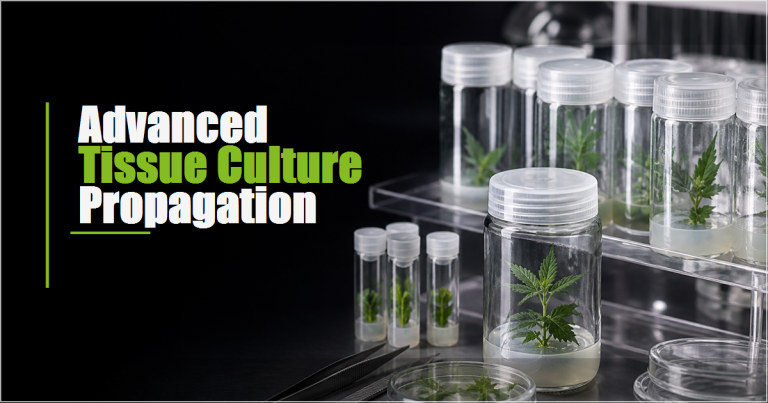
This is also where cloning overlaps with more controlled propagation methods. The article on advanced tissue culture propagation shows the stricter end of the clean-propagation spectrum, and ordinary cloning can borrow some of that discipline without becoming a lab workflow.
Control the Rooting Environment
Clones need moisture support while they lack roots, but they also need oxygen, moderate warmth, and enough light to stay alive without being pushed too hard. Most failed clone batches come from an environment that is too dry, too wet, too hot, too cold, too bright, or too stagnant.
Important controls include:
- Moderate humidity during the early no-root stage
- Gentle light instead of intense canopy-level lighting
- Warm but stable root-zone conditions
- Clean rooting media with enough air around the stem
- Gradual ventilation as cuttings begin to recover
The goal is to reduce stress while roots form. A clone that is forced to transpire heavily before it can replace water is more likely to wilt and stall.
Build a Batch Workflow
A single cutting can be managed casually. A serious clone program needs a batch workflow because timing, labeling, and consistency become harder as numbers increase.
One practical workflow is:
- Select and inspect source plants the day before cutting
- Prepare trays, media, labels, and tools before taking any cuttings
- Take similarly sized cuttings from similar plant positions
- Trim and place each cutting consistently
- Record source plant, date, batch, and rooting medium
- Check the batch daily without overhandling it
- Harden off rooted clones gradually before transplanting
This makes problems easier to diagnose. If one tray roots well and another fails, the records can point toward source plant, handling, environment, or media rather than leaving everything to memory.
Use Selection Pressure After Rooting
Advanced cloning doesn’t mean keeping every rooted cutting. Some clones root slowly, grow weakly, or show early signs that they shouldn’t move into the next stage. Keeping every plant can create uneven rooms and weaken later decisions.
Cull or separate clones that show:
- Poor rooting compared with the batch
- Persistent wilting after other clones recover
- Weak or distorted new growth
- Pest or disease symptoms
- Label uncertainty
Keeping weak or unidentified clones can make the next stage harder to manage. A clone is only useful if it’s healthy, traceable, and worth the space it will occupy.
Plan for Genetic Preservation
Cloning is useful for preserving selected plants, but it isn’t the only preservation method. Advanced growers often combine clone libraries, mother plant systems, seed storage, and sometimes tissue culture depending on what needs to be protected.
For exact genetic copies, clones and tissue culture matter. For broader backup and breeding flexibility, a personal seed bank may support a different kind of preservation strategy.
The important point is to define the purpose. A clone taken for production, a clone taken for testing, and a clone kept for long-term preservation shouldn’t be managed as if they’re the same thing.
Prevent Pest and Disease Carryover
Clones can move hidden problems forward. If source plants carry pests, powdery mildew pressure, or weak root-zone habits, cloning can spread those issues into the next cycle.
Before cutting, inspect plants carefully and avoid using questionable material. If pest pressure is part of the reason a source plant looks weak, review clean plant-care practices such as neem oil use in cannabis cultivation before building a clone batch around that plant.
Common Advanced Cloning Mistakes
Even experienced growers can lose a batch when a step in source inspection, handling, or environmental control is missed. The work becomes less predictable when the clone room is treated as a side task rather than a controlled propagation stage.
Common mistakes include:
- Taking cuttings from stressed or poorly labeled plants
- Mixing inconsistent cutting sizes in the same batch
- Using dirty trays, old domes, or dull blades
- Keeping humidity too high after roots begin forming
- Moving clones into stronger light too quickly
- Keeping weak rooted clones just because they survived
- Failing to record source plant and batch details
Bottom Line
Advanced cannabis cloning works best when the whole system is intentional: healthy source plants, clean handling, consistent cuttings, controlled rooting conditions, careful records, and selective follow-through. The cutting itself is only one step. The real advantage comes from building a propagation workflow that produces healthy, traceable clones again and again.

1 response