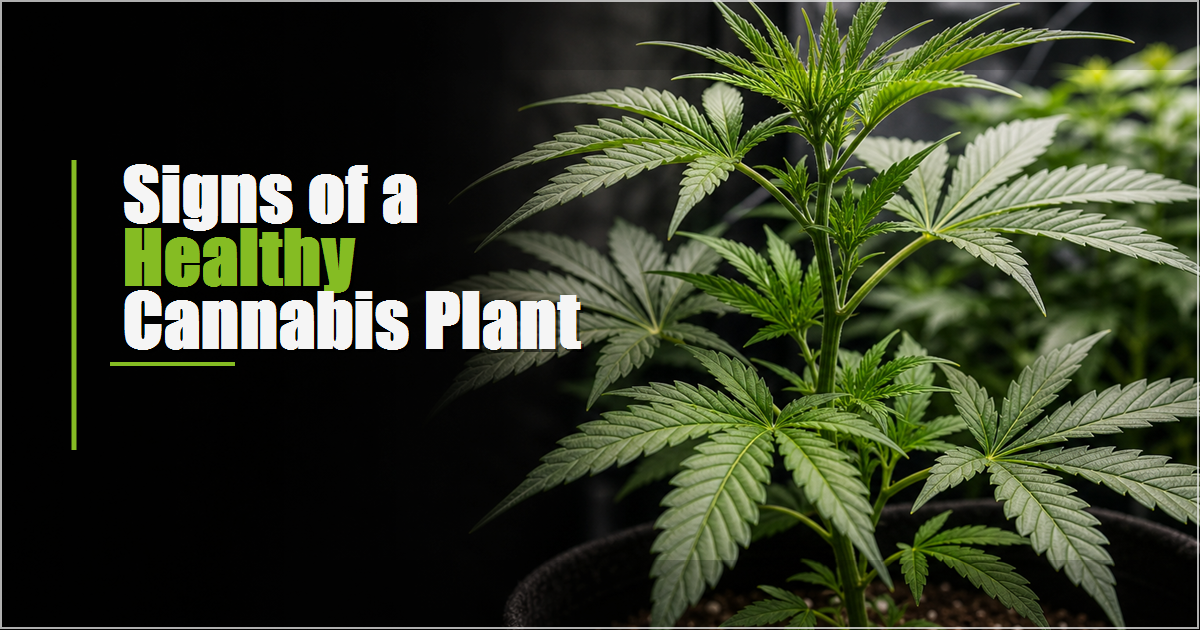
The signs of a healthy cannabis plant include steady new growth, strong color, firm stems, balanced leaf posture, clean root-zone behavior, and a plant structure that matches its growth stage. For intermediate growers, the real skill isn’t just spotting a plant that looks good today. It’s learning how healthy growth behaves over time so small changes can be noticed before they become bigger problems.
What Does a Healthy Cannabis Plant Look Like?
A healthy cannabis plant looks active, balanced, and consistent. Leaves should be mostly even in color, stems should support the plant without collapsing, and new growth should appear at a pace that makes sense for the plant’s age and environment. The plant shouldn’t look frozen in place, limp, burned, or constantly stressed.
Health is also stage-dependent. A young seedling, a vegetative plant, and a flowering plant will not all look the same. The question is whether the plant looks appropriate for its current stage and whether it is progressing without repeated setbacks.
Strong New Growth
New growth is one of the clearest signs of plant health. In a well-managed environment, new leaves should emerge regularly, expand normally, and show a healthy shape for the cultivar. The newest growth may be slightly lighter than mature leaves at first, but it should not be severely pale, twisted, burnt, or stalled for long periods.
Intermediate growers should pay attention to rhythm. A plant that grows steadily and predictably is usually easier to manage than one that surges, stalls, and then shows stress every time conditions change.
Healthy Leaf Color and Texture
Healthy cannabis leaves are usually a clear green that fits the plant’s genetics and stage of growth. They should not show widespread yellowing, dark clawing, crisp edges, silver streaking, or irregular spotting across the canopy. Some natural variation is normal, but repeated or spreading discoloration deserves attention.
- Even green color usually suggests stable nutrition and environment
- Firm leaf texture often points to good hydration and root function
- Clean leaf surfaces make pest or disease issues easier to detect early
- Consistent new leaves suggest the plant is not fighting a major stressor
Leaf color alone is not a complete diagnosis, but it is a useful starting point. A plant can be green and still have root or environmental issues, so always read the leaves together with growth rate, posture, and the condition of the medium.
Balanced Leaf Posture
Healthy leaves usually sit with a natural lift toward the light without severe drooping, curling, canoeing, or clawing. This balanced leaf posture is one of the easiest visual checks to build into a daily routine, though some movement is normal before and after watering, during temperature changes, or near the end of the light cycle.
The important pattern is whether the plant returns to a stable posture. If leaves stay drooped after watering, curl upward in heat, or claw downward for several days, the plant may be signaling that something in the root zone, light intensity, or feeding pattern needs adjustment.
Sturdy Stems and Good Structure
A healthy plant should have stems that can support its leaves and developing branches. Seedlings should not stretch excessively toward weak light, and vegetative plants should build a structure that can hold future growth. If a plant keeps reaching instead of thickening up, the issue may be closer to light placement than plant vigor, so reviewing how to optimize light through different growth stages can give that symptom some context.
Structure is especially important if you plan to train, transplant, or flower the plant later. A stable frame makes it easier to manage airflow, light penetration, and canopy shape as the plant matures.
A Functional Root Zone
You can’t always see the roots, but you can often see how well the root zone is working. A healthy root zone supports steady water uptake, normal leaf posture, and consistent growth after watering. Good root health also means the medium shouldn’t stay swampy for too long, dry out immediately, smell sour, or pull away from the container in a way that makes watering uneven.
Root-zone health connects closely with container size, drainage, and watering rhythm. If the plant looks stressed even when the leaves are not showing a clear nutrient pattern, check whether the medium is breathing and drying properly before adding more inputs. A plant that looks hungry may actually be sitting in a root zone that needs better soil drainage.
No Obvious Pest or Disease Pressure
A healthy cannabis plant should be free of visible pest damage, mold, mildew, and spreading lesions. Look at the undersides of leaves, growing tips, lower canopy, and soil surface. Early pest pressure can look minor at first, but small marks, stippling, webbing, or residue can become more serious if ignored.
This is where regular inspection matters. A plant can look healthy from across the room while still carrying early warning signs in the lower canopy. Intermediate growers benefit from building pest checks into their normal routine rather than waiting for obvious damage.
Normal Response After Watering or Training
Healthy plants recover predictably from ordinary cultivation tasks. After watering, the plant should generally return to a comfortable posture as the root zone balances out. After light training, transplanting, or pruning, new growth should continue once the plant has had time to adjust.
A plant that stays stalled after every routine action may not be unhealthy in one obvious way, but it may be operating too close to stress. That can point to weak roots, unstable environment, too much handling, or a mismatch between the plant’s stage and the grower’s expectations.
Signs That Look Healthy but Need Context
- Very dark green leaves can be normal in some cases, but they can also suggest excess nitrogen
- Fast vertical growth may be vigor, or it may be stretching from insufficient light
- Large fan leaves can indicate strength, but they can also reduce airflow if the canopy is crowded
- Slight lower-leaf fading can be normal late in the cycle, but early spreading yellowing needs attention
Good observation means reading patterns instead of reacting to one isolated sign. A healthy plant is not perfect every minute. It is stable, responsive, and moving in the right direction.
How to Track Plant Health Over Time
The easiest way to improve your eye is to compare the plant against itself. Take notes on watering, feeding, environment, and visible growth. Photos taken from the same angle every few days can make changes easier to see, especially when growth feels slow in the moment.
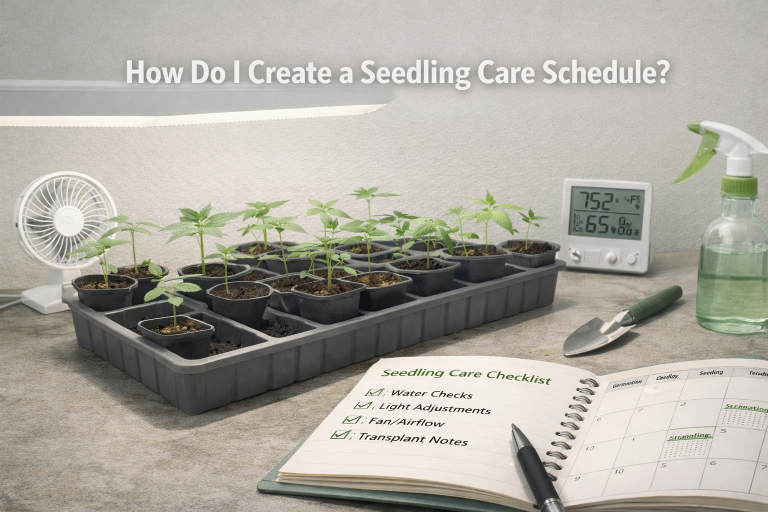
If you want a more structured routine, make the inspection repeatable instead of relying on memory. A simple seedling care schedule works because it turns plant health into a pattern: what changed since yesterday, what changed after watering, and what changed after the last adjustment?
Bottom Line
A healthy cannabis plant shows steady growth, appropriate color, balanced leaf posture, sturdy structure, and no obvious pest or disease pressure. For intermediate growers, the best sign of health is consistency over time: the plant responds well to care, recovers from normal stress, and keeps developing in a way that matches its stage and environment.
5 responses