To manage humidity levels in an indoor grow room, measure conditions near the canopy, move moist air out of the room, and adjust dehumidification as the plants get larger. Humidity control isn’t one perfect number you set once. It changes with temperature, plant size, growth stage, airflow, watering habits, and how dense the canopy becomes.
Why Humidity Matters Indoors
Humidity affects how cannabis plants move water through their leaves. When the air is too wet, transpiration slows and the canopy can stay damp. When the air is too dry, plants can lose water faster than the roots can replace it. Either extreme can stress the plant, especially in a sealed or poorly ventilated room.
Humidity issues often overlap with light, airflow, and watering problems, so it’s worth reading the whole plant before changing every control at once. If the leaves, color, or posture look wrong, compare the environment with the signs of a healthy cannabis plant.
Measure Humidity Where the Plant Feels It
A wall-mounted hygrometer can miss what’s happening inside the canopy. Place at least one sensor near leaf level, and check readings during lights-on and lights-off periods. Humidity often rises at night because temperatures drop and plants continue releasing moisture into the room.
Adjust by Growth Stage
Seedlings can tolerate more moisture in the air than mature flowering plants, but stagnant humidity is still a problem. Vegetative plants need enough humidity to keep growth moving, while flowering plants usually need tighter control because dense buds and overlapping leaves can trap moisture.
- Seedlings: prevent drying out, but introduce gentle airflow early.
- Vegetative growth: balance humidity with active transpiration.
- Early flower: increase airflow as the canopy fills in.
- Late flower: watch for damp pockets, cool nights, and dense bud sites.
Use Airflow and Dehumidification Together
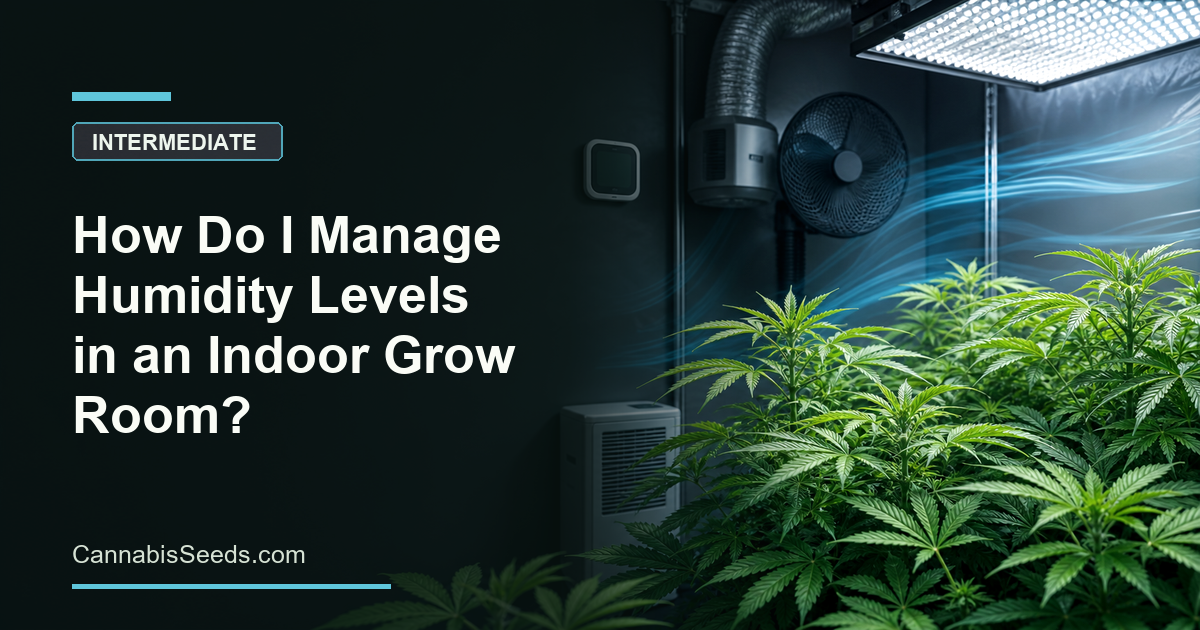
Fans move air around, but they don’t remove moisture by themselves. Exhaust ventilation, fresh intake air, and dehumidifiers do the removal work, while oscillating fans help prevent stagnant pockets around leaves and buds. The best setup usually combines both: remove humid air from the room and keep the remaining air moving through the canopy.
Canopy shape matters too. A dense, uneven plant traps more moisture than an open one. If the room is hard to manage because growth is stacked too tightly, the article on light distribution for even canopy growth can help connect humidity control with canopy structure.
Watch for Mold-Friendly Conditions
High humidity becomes much more risky when leaves stay wet, air is stagnant, or night temperatures fall sharply. If white powdery patches appear, don’t wait for the issue to spread. Compare the symptoms with powdery mildew on cannabis plants and correct the environment quickly.
Common Humidity Mistakes
- Measuring humidity away from the canopy.
- Running fans without exhausting humid air.
- Ignoring lights-off humidity spikes.
- Overwatering and adding unnecessary room moisture.
- Letting dense lower growth block airflow.
Aim for a Room That Stays Predictable
The goal is a grow room that doesn’t swing wildly between dry stress and damp, mold-friendly air. Measure near the canopy, adjust as plant size changes, and treat humidity as part of the whole environment rather than a number on a single sensor.