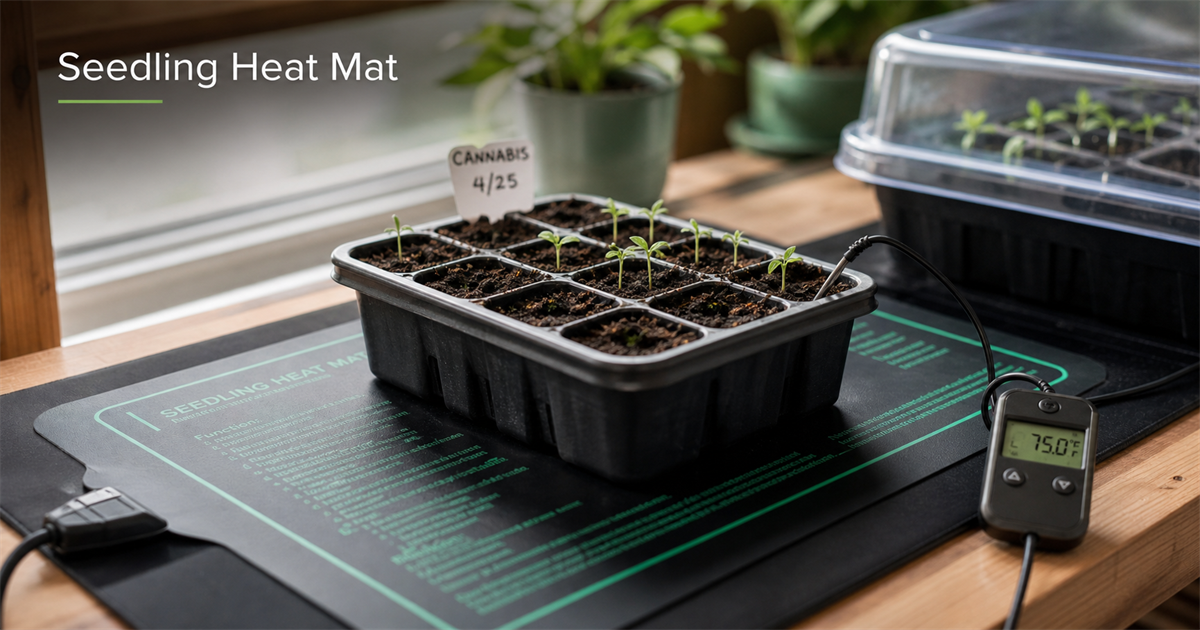
To use a seedling heat mat for cannabis seeds, place the mat under the tray or starter cups, monitor the root-zone temperature, and use gentle warmth rather than maximum heat. A heat mat can improve germination consistency when the room is cool, but it should be treated as a temperature-control tool, not a way to force seeds to sprout faster.
What a Seedling Heat Mat Does
A seedling heat mat warms the area beneath a germination tray so the seed zone stays more stable. Cannabis seeds usually germinate best when they are warm, moist, and protected from sharp temperature swings. If the room is cold, the medium can stay cool even when the air feels comfortable, and that can slow the early root response.
Before using extra heat, it helps to understand the basic cannabis seed germination process. Warmth is only one part of the setup; moisture, oxygen, seed depth, and patience still matter.
When Should You Use a Heat Mat?
Use a heat mat when the germination area is consistently cool, when starter plugs or soil cups feel cold to the touch, or when seeds are taking longer than expected despite good moisture control. The goal is a steady, mild temperature around the seed, not hot conditions.
- Cool basements or garages
- Early spring indoor starts
- Drafty rooms or window-adjacent shelves
- Starter trays that dry slowly because the medium stays cold
How to Set Up a Heat Mat Safely
1. Put the mat under the tray
Place the heat mat on a flat, dry surface, then set the seed tray, starter cells, or small cups on top. Avoid folding the mat or placing it where water can pool underneath. A stable setup is safer and keeps warmth more even across the tray.
2. Use a thermostat if possible
A thermostat gives better control than running the mat continuously. The probe should measure the area near the seed zone, not just the air above the tray. Without a thermostat, check the medium often so it doesn’t become warmer than intended.
3. Keep the medium evenly moist
Heat speeds up evaporation, so starter media can dry out faster on a mat. The seed zone should stay damp, but never waterlogged. If a seed still hasn’t opened after conditions stabilize, compare the setup with the normal range for how long cannabis seeds take to germinate before adding more heat or water.
What Temperature Should the Mat Provide?
The best target is gentle root-zone warmth. Many growers aim for a stable germination temperature that feels warm but not hot, then adjust based on the medium and room conditions. If the tray feels hot to your hand, it’s too warm for germinating seeds.
Do not rely on the mat’s advertised output alone. Room temperature, tray thickness, humidity dome use, and starter medium all affect the actual temperature around the seed. A simple thermometer or thermostat probe removes much of the guesswork.
Should You Use a Humidity Dome With a Heat Mat?
A humidity dome can help keep the surface from drying out, but it can also trap too much heat and moisture. If you use a dome, vent it regularly and check for condensation that becomes excessive. Seeds need moisture, but they also need oxygen around the emerging root.
Once seedlings emerge, conditions change. At that point, light and airflow become more important, and the plant shouldn’t stay in a stagnant, overly humid dome. If the seed has broken the surface and begins stretching, review the difference between seed-stage darkness and early seedling light in the guide on whether cannabis seeds need light to germinate.
Common Heat Mat Mistakes
- Running the mat too hot without checking the seed-zone temperature
- Letting starter media dry out faster than expected
- Using a sealed humidity dome with no airflow
- Keeping seedlings on extra heat longer than needed
- Trying to fix old, damaged, or poorly stored seeds with heat alone
If seeds are still slow after warmth and moisture are stable, the problem may be seed age, storage history, planting depth, or medium conditions. Heat can support germination, but it can’t rescue every weak seed.
When to Remove the Heat Mat
Remove or reduce heat once seedlings have emerged and the room is warm enough for steady growth. Continuing to add bottom heat after emergence can dry small cups quickly and stress young roots. At that stage, the priority shifts toward gentle light, careful watering, and stable early growth.
If the seedling is already above the surface, start thinking in terms of early plant care rather than germination. A simple seedling care schedule can help keep watering, light, and observation consistent during the first fragile days.
Bottom Line
A seedling heat mat is useful for cannabis seeds when the germination area is too cool or unstable. Use it with temperature monitoring, keep the medium evenly moist, vent humidity domes, and reduce extra heat once seedlings emerge. Warmth helps, but balance is what makes the method work.
3 responses