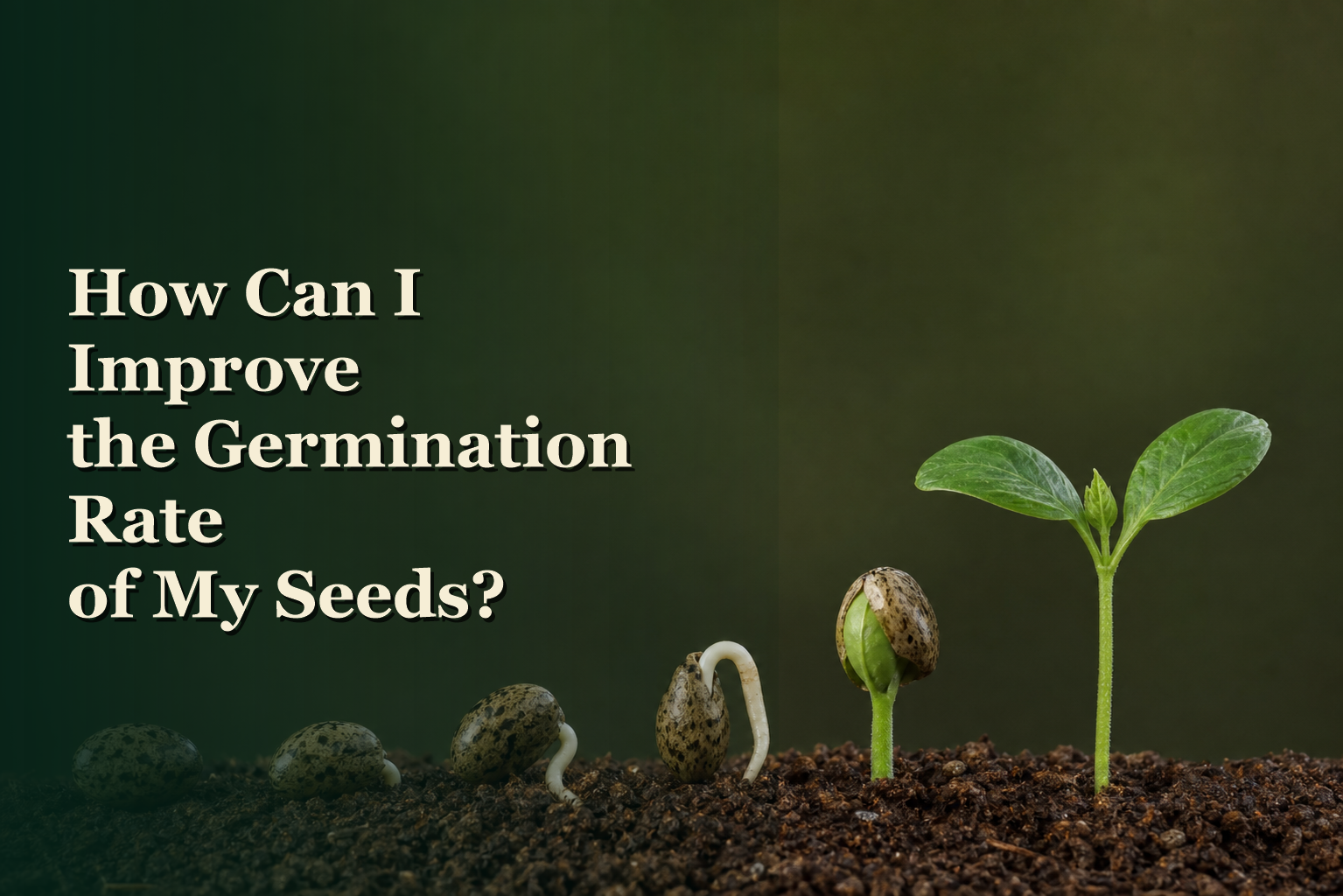
You can improve cannabis seed germination [g] by starting with mature, well-stored seeds and keeping moisture, warmth, and oxygen stable. A clean, lightly moist medium [g] around 70-80°F (21-27°C) works for many viable seeds [g], while waterlogged conditions, repeated handling, and rapid temperature swings can lower your success rate.
Measure the Rate Before You Change the Method
It is hard to improve a rate you are not recording. For each labeled batch, write down how many seeds you started and how many germinated within the same observation period. Calculate the result this way:
Germination rate = seeds germinated ÷ seeds started × 100
If eight of ten seeds germinate, the rate is 80 percent. Keep the raw count beside the percentage, especially with small batches; one seed can make a small test look much better or worse than it really is.
Start With Viable Seeds
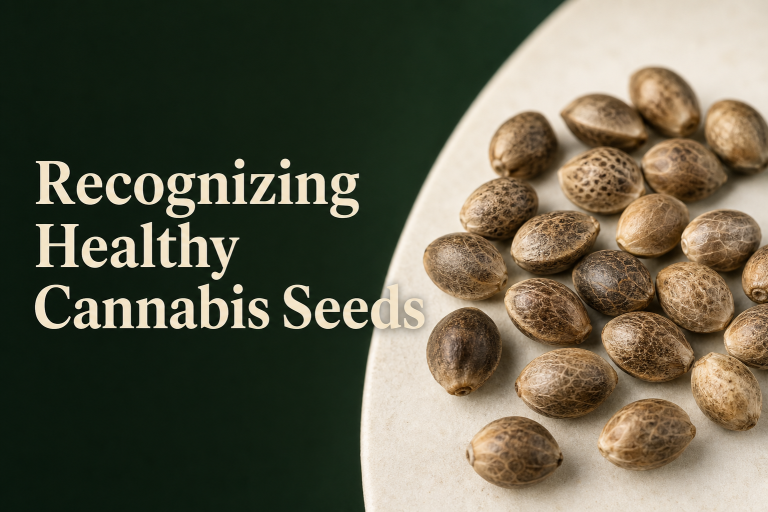
No germination technique can restore a dead seed, so start with seeds that have intact shells and a reliable storage history. Heat and humidity during storage can reduce viability even when a seed looks normal.
If you aren't planting them right away, use a long-term storage method that keeps them cool, dark, dry, and clearly labeled.
Keep Moisture Consistent
Water activates germination, but germinating seeds also need oxygen. The medium should feel evenly moist rather than dripping or waterlogged.
Common moisture mistakes include:
- Soaking seeds for too long
- Letting paper or starter media dry completely
- Saturating the small root zone
- Sealing a container with no air exchange
- Repeatedly opening or moving the seed
If you germinate directly in a medium, water gently so the seed isn't pushed deeper or exposed at the surface.
Maintain Moderate Warmth
Most cannabis seeds germinate more consistently in a warm, stable range. Cold slows metabolic activity, while excessive heat increases stress and can encourage microbes.
A heat mat [g] can help when the room is cold, but it should be controlled by a thermostat. Monitor the temperature in the medium instead of relying on the mat's dial. See how to use a seedling heat mat for cannabis seeds for setup guidance.
Choose a Clean, Airy Method
Several methods can work when conditions are controlled. Compare the site's general cannabis seed germination process with specific approaches using coco coir or peat pellets.
Whichever method you choose, keep the process simple:
- Wash your hands and clean your containers and tools.
- Label each cultivar with its start date.
- Keep the temperature and moisture as stable as you can.
- Don't touch the taproot [g].
- Don't move a seedling [g] until its next medium is ready.
Run a Fair Comparison
When a batch underperforms, change one variable on the next attempt rather than changing the temperature, medium, soaking time, and container all at once. Use the same seed lot when possible, keep the observation period consistent, and record what changed. That gives you a useful comparison instead of a new method with no clear explanation for the result.
Penn State Extension's overview of seed and seedling biology explains the broader relationship among moisture, temperature, aeration, and germination. Those principles help you design a cleaner comparison, but the actual result still depends on the cannabis seed lot you are testing.
Give Seeds Enough Time
Many seeds germinate within several days, but age, shell condition, and temperature affect the pace. Don't discard a seed just because it didn't match another seed's timeline. Review how long cannabis seeds take to germinate before intervening.
Let the Next Batch Answer One Question
Higher germination rates come from consistency, not tricks. Use viable seeds, clean materials, moderate warmth, balanced moisture and oxygen, and minimal handling. Then use the next batch to test one specific improvement. Even when the percentage does not rise immediately, you will know more about what helped, what did not, and whether the seed lot itself may be the limiting factor.