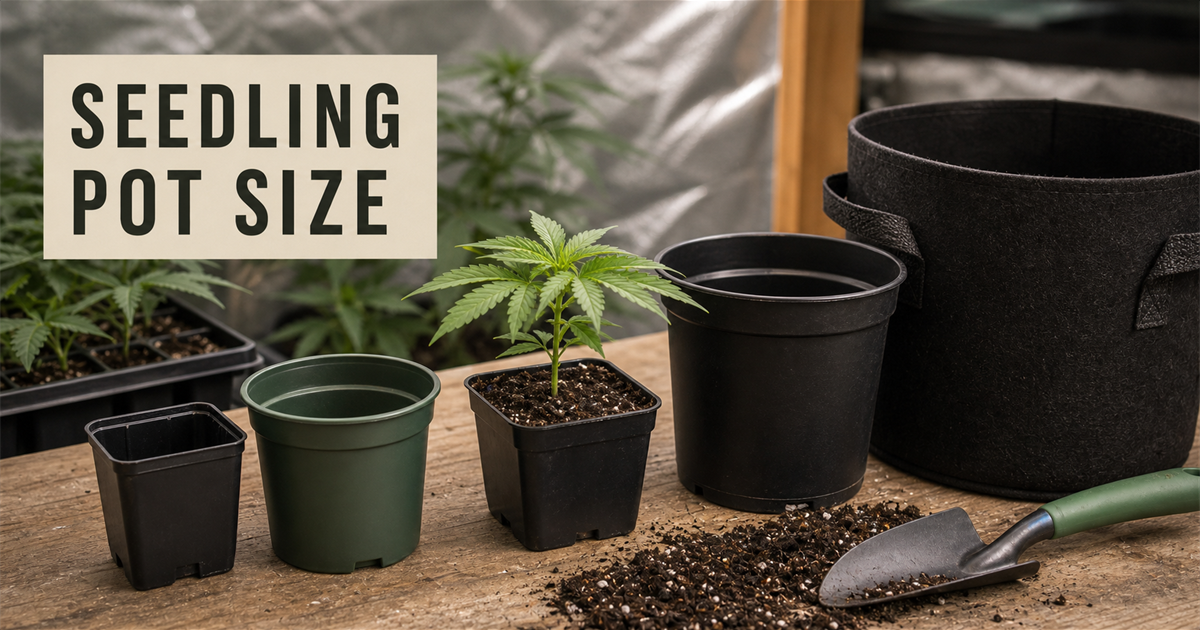
To choose the right pot size for cannabis seedlings, match the container to the seedling’s current root system, watering skill, growth rate, and next transplant plan. The goal isn’t to give a tiny plant every inch of its future root space on day one. It’s to give the roots room to move while keeping moisture easy to read.
Why Seedling Pot Size Matters
Cannabis seedlings are small above the soil and still developing below it. That makes container size a root-zone decision as much as a space decision. A well-sized starter container helps the grower read dry-down, avoid constant saturation, and transplant before roots become restricted.
Pot size also changes the way mistakes show up. A tiny cup can dry before the grower expects it. A large container can stay wet around a young root system long after the surface looks ready for more water. If seedlings are struggling after emergence, container choice belongs in the same check as a basic seedling care schedule.
Start With the Root System, Not the Final Plant
A seedling doesn’t need its final container on day one just because it may become a large plant later. Early roots need air, moisture, and a manageable volume of medium, and the right starting pot gives them that while keeping the grower close enough to notice how the plant is using water.
- Smaller starter containers make dry-down easier to observe
- Larger containers reduce transplant frequency but demand better watering judgment
- Container depth and drainage matter along with volume
- The growth rate of the seedling determines how soon the next move arrives
What to Consider Before Choosing a Container
The medium you are using
A light, airy starter mix behaves differently from a dense soil that holds water for a long time. If the medium drains slowly, an oversized pot becomes less forgiving. If the medium is very airy and the environment is warm, small containers may need closer attention.
Your transplant plan
Some growers prefer a staged progression from starter container to vegetative pot to final pot, while others reduce handling by starting larger. Both can work, but the container needs to match the plan. If you want fewer transplants, be prepared to water the active root zone rather than saturating a full volume the seedling can’t use yet.
The plant’s pace
Fast, vigorous seedlings can fill a starter container sooner than expected. Slower seedlings should not be pushed into a bigger pot just because a calendar says so. Root development, dry-down speed, and visible growth give better cues than a fixed day count.
Small Pot or Large Pot?
A smaller pot gives clearer feedback. You can lift it, feel the weight change, and see when roots are beginning to occupy the medium. That feedback is useful for intermediate growers refining watering habits. The tradeoff is simple: once growth accelerates, a small container gives you less buffer.
A larger pot gives more root room and may reduce transplant stress, but it increases the risk of keeping too much medium wet around a small plant. When drainage, temperature, and watering aren’t well controlled, oversized containers can hide a moisture problem until the seedling slows down.
How to Know a Seedling Is Ready for a Bigger Pot
- The container dries much faster than it did earlier
- Roots appear at drainage holes or along the edge of the root ball
- The seedling is growing steadily and can use more root space
- Watering frequency is becoming difficult to keep stable
Those signals are worth reading before the roots become crowded. Good transplant timing keeps the next move deliberate. If a plant stays in a too-small container for too long, the next issue may be root restriction rather than simple seedling pot choice.
Container Features That Help Seedlings
Reliable drainage
Drainage holes are basic, but the surrounding medium matters too. Water should move through the pot without leaving the root zone compacted or permanently soggy. When a seedling pot repeatedly stays wet at the bottom, improve the physical setup before increasing feed strength.
Enough depth for roots
Young cannabis roots want room to explore downward and outward. A shallow container can become limiting even when it looks wide enough from above.
Easy handling
Seedlings benefit from careful transplanting. A container that releases the root ball cleanly can be easier to work with than a rigid shape that forces rough handling.
Common Pot-Size Mistakes
- Starting in a very large pot and watering the whole volume too often
- Waiting for obvious stress before transplanting a vigorous seedling
- Ignoring drainage because the pot itself is the chosen size
- Choosing by final plant size instead of current root demand
- Transplanting repeatedly without letting the seedling stabilize
If pot size looks right but seedling watering still behaves strangely, the next clue may be the medium. Poor soil drainage can make even a reasonable container feel oversized to a young plant.
Key Takeaways
The right pot size for cannabis seedlings supports root expansion without making the early root zone hard to manage. Choose for the plant in front of you, not only the plant you expect later, then move up before the container becomes the growth limit.
1 response