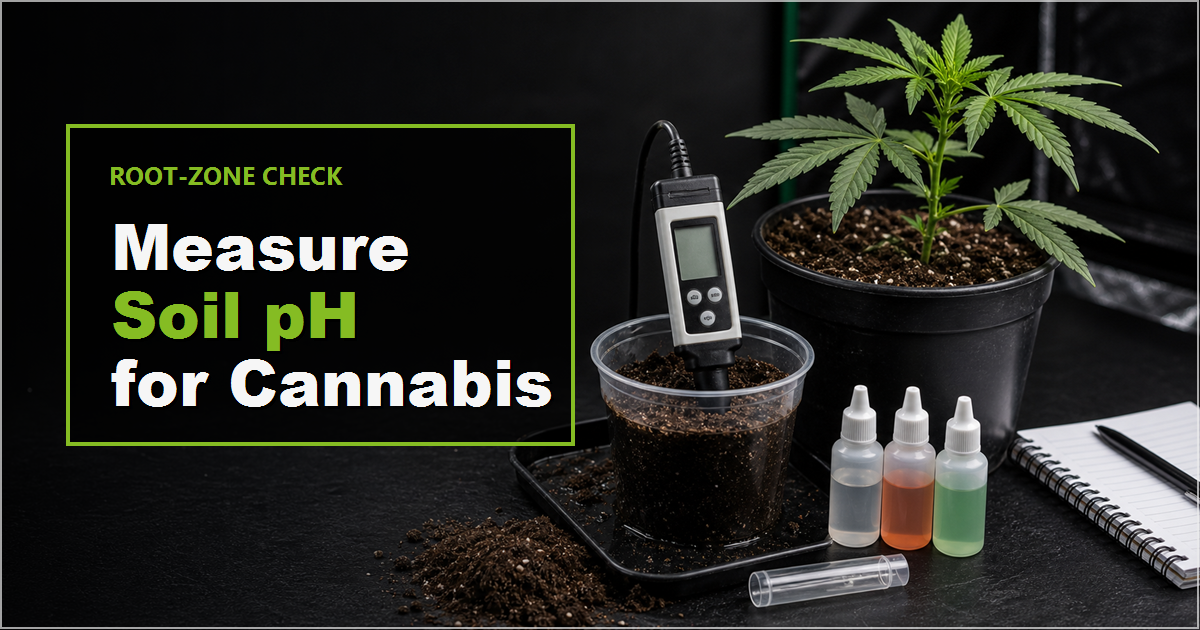
The best way to measure soil pH for cannabis plants is to test a representative root-zone sample with a calibrated meter and a consistent slurry method. Treat runoff as supporting evidence, not the final answer. The useful question isn’t simply “What number did I get?” It’s whether repeated measurements, plant symptoms, and root-zone conditions point to the same problem.
Why Soil pH Matters
Soil pH affects nutrient availability and root-zone biology. When the medium moves too far outside a workable range, a plant can show deficiency-like symptoms even when nutrients are present. Adding more fertilizer at that point can make the imbalance harder to diagnose.
If a plant looks hungry even though it has been fed, include pH in the same diagnostic path as moisture, drainage, root health, and salt buildup. The guide to dealing with nutrient lockout explains why availability problems often look like a shortage.
Use a Meter You Can Trust
A digital pH meter is useful only when its probe is clean, properly stored, and calibrated with fresh buffer solutions. Calibrate according to the manufacturer’s instructions, rinse between samples, and don’t let an ordinary glass probe dry out. If the readings drift or take unusually long to settle, troubleshoot the meter before changing the soil.
How to Run a Consistent Soil Slurry Test
- Collect a representative sample. Take small portions from the active root zone rather than surface dust or one unusual pocket.
- Remove large debris. Separate thick roots, bark chunks, and stones that would make repeated tests inconsistent.
- Use the same soil-to-water ratio each time. Consistency matters more than inventing a different mixture for every container.
- Use suitable water. Distilled or otherwise appropriate low-mineral water helps reduce interference from the water itself.
- Mix and allow the sample to equilibrate. Follow a defined waiting time, then measure the liquid portion with the calibrated meter.
- Record the method and result. Include the container, depth, date, recent watering or feeding, and plant symptoms.
What About Runoff pH?
Runoff can reveal a trend, but it is affected by channeling, salt concentration, dry pockets, irrigation volume, and the path water took through the container. A strange runoff number is a reason to investigate, not automatically a reason to flush or add pH adjusters.
When runoff and slurry results disagree, repeat the controlled test and inspect the root zone. A compacted or waterlogged medium can produce plant stress that looks chemical even when the measured pH is acceptable. Review soil drainage and root-zone aeration before treating every symptom as a pH problem.
When to Test
- When deficiency-like symptoms don’t match the feeding history
- When growth slows without a clear light, temperature, or watering cause
- After changing water sources, fertilizers, amendments, or soil mixes
- When repeated feeding corrections haven’t helped
- Before making a large root-zone correction based on one questionable reading
How to Interpret the Result
Look for a pattern across repeated tests rather than chasing one perfect number. Ask whether the meter was calibrated, whether the sample represented the roots, whether recent irrigation changed the reading, and whether plant behavior supports the diagnosis. Make small, measurable corrections and give the root zone time to respond.
Common Testing Mistakes
- Trusting an uncalibrated or poorly stored meter
- Testing only the dry surface
- Changing the slurry ratio or waiting time between tests
- Using runoff as the only diagnosis
- Correcting aggressively after one result
- Ignoring moisture, drainage, and salt buildup
Bottom Line
A useful soil pH test is repeatable and tied to a decision. Use a calibrated meter, sample the actual root zone, follow the same slurry method each time, and compare the number with the plant and medium. That approach helps you decide whether pH needs correction or whether the real problem lies elsewhere.