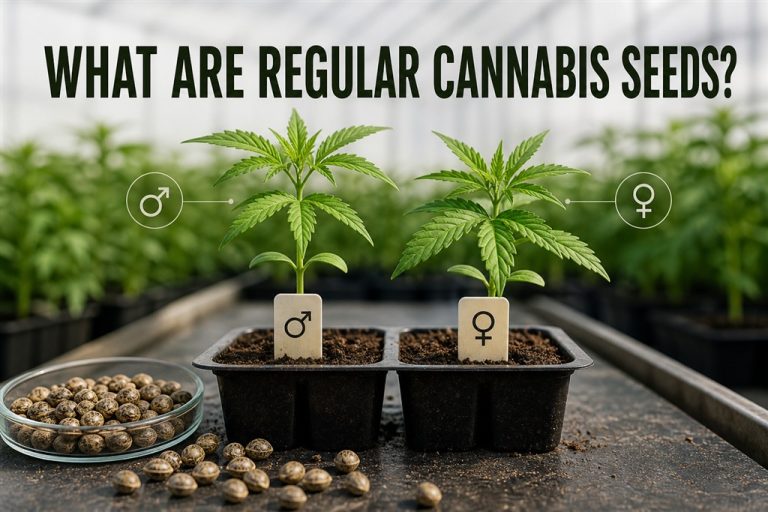
You can't reliably tell whether a cannabis seed is male or female by looking at it. Plant sex is genetic and usually becomes visible only after the plant develops reproductive structures, so the seed's size, color, weight, shape, and shell pattern won't give you a dependable answer.
Why Seed Appearance Doesn't Reveal Sex
Both male and female plants can come from seeds that look mature, firm, dark, light, striped, or plain. Those shell traits reflect maturity and natural variation, not whether the plant will be male or female.
Claims that a round seed is female or an elongated seed is male aren't supported by a dependable biological test. The only useful information available before germination comes from the seed type:
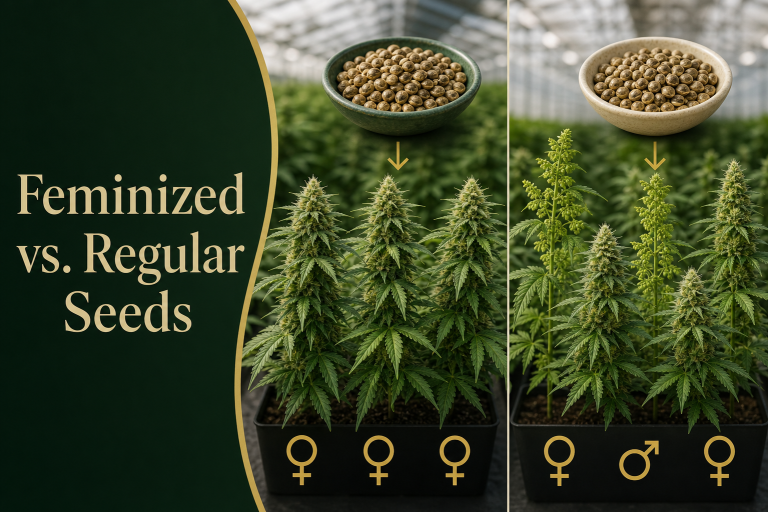
- Regular seeds [g] can produce male or female plants.
- Feminized seeds [g] are bred to produce female plants at a very high rate.
- Autoflowering seeds can be regular or feminized depending on the line.
When Plant Sex Becomes Visible
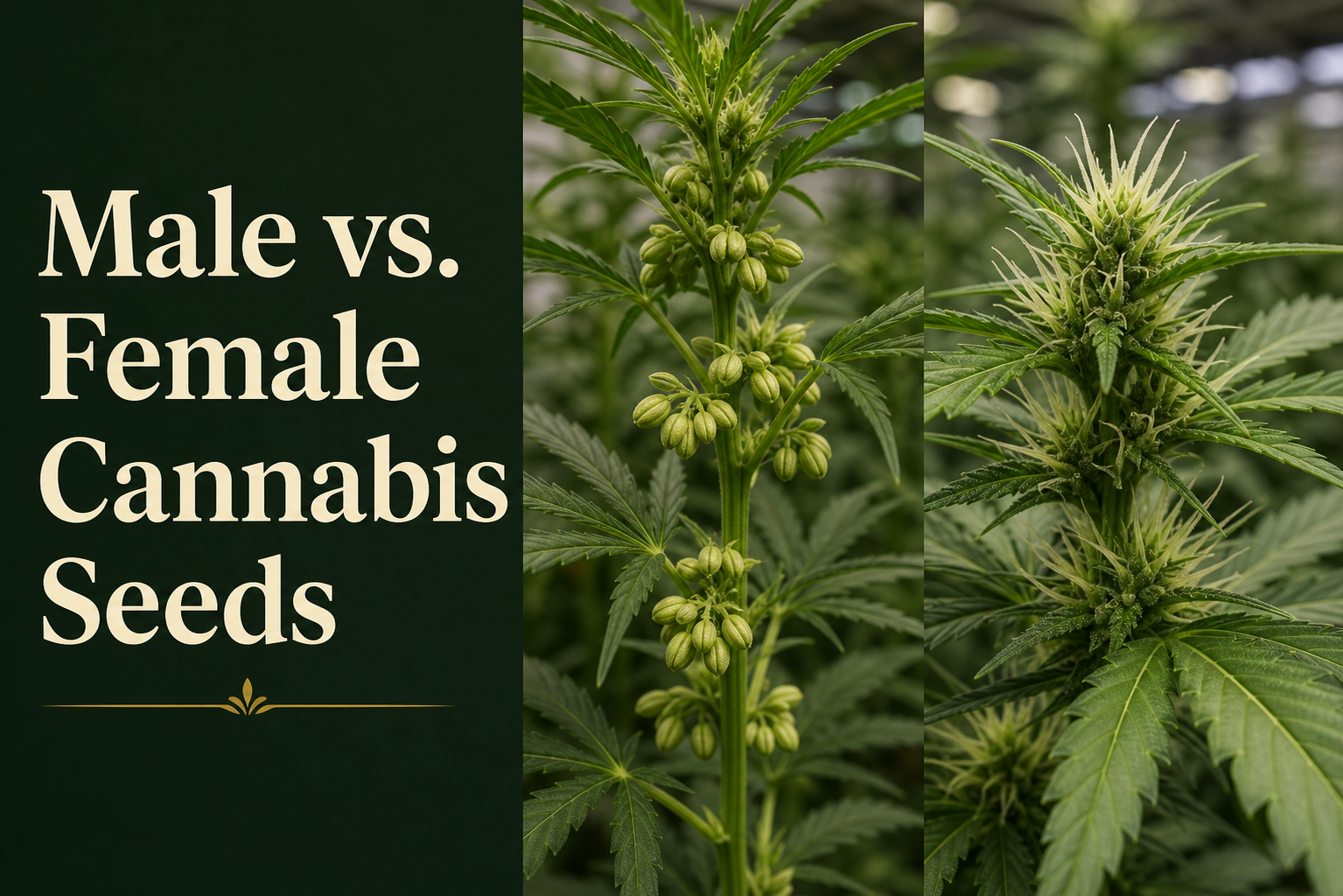
Sex traits usually appear at the nodes as the plant matures or enters preflowering. The node is where a branch meets the main stem.
Female preflowers usually show a small teardrop-shaped bract [g] with one or two fine pistils [g]. Male preflowers form smooth, rounded pollen sacs [g], often in small clusters, without pistils. Early structures can be tiny, so use magnification and inspect several nodes before making a decision.
General vigor won't tell you a plant's sex. A fast-growing, healthy plant may be male or female, and the site's guide to signs of a healthy cannabis plant should be used for health assessment rather than sex prediction.
Why Early Identification Matters
If your goal is unseeded female flower, a mature male can release pollen and fertilize nearby females. When you're growing regular seeds, inspect your plants consistently and separate unwanted males before the pollen sacs open.
Breeders may intentionally keep selected males because their genetics contribute to the next generation. In that setting, males need to be isolated, accurately labeled, and managed under a breeding plan.
Can Genetic Testing Identify Sex Earlier?
Some laboratory services can test young leaf tissue for sex-associated markers before visible preflowers form. That can save space in larger programs, but it isn't the same as judging the seed by eye. The result is only useful when the lab uses a validated method and the sample is labeled correctly.
The site's discussion of genetic markers in high-CBD cannabis provides additional context on what marker testing can and can't establish.
Bottom Line
Male and female cannabis seeds look alike. Check the breeder's labeling to learn whether a lot is regular or feminized, then confirm reproductive traits on the growing plant or through a validated tissue test [g].