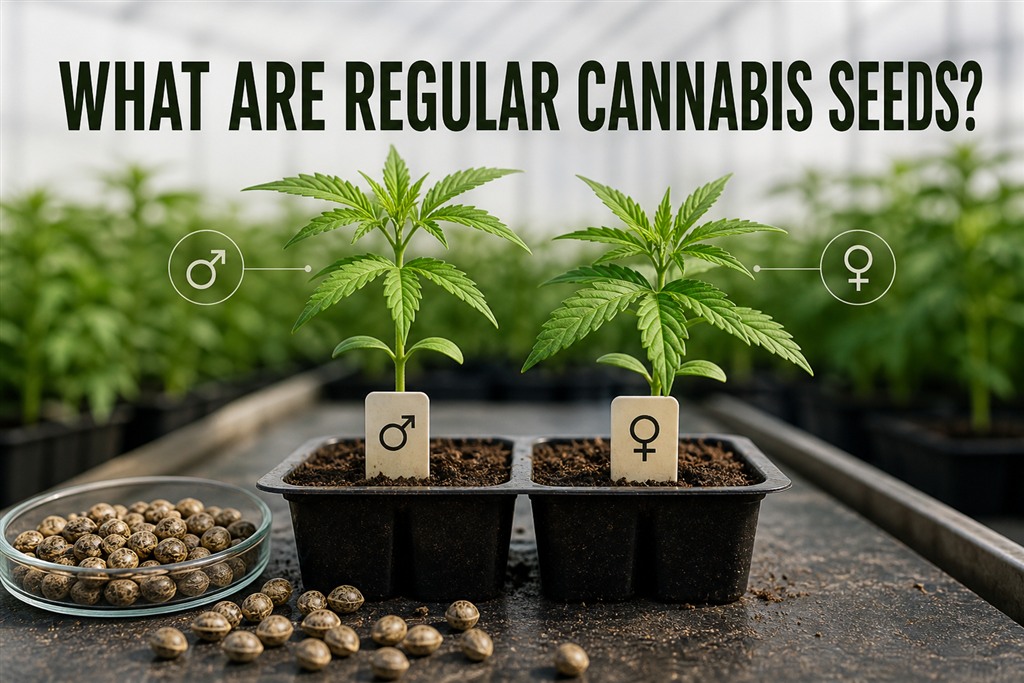
Regular cannabis seeds are seeds produced from a cross that can yield both male and female plants. They aren’t “untreated feminized seeds,” and you can’t identify the future sex of a plant by looking at the shell. The practical question is whether your project can use males, manage sex identification, and accommodate the extra plants needed to reach your target number of females.
That makes regular seed a breeding and population-planning choice, not a general quality grade. A well-documented regular line may be useful for breeding or preserving genetic diversity, while a poorly documented one can be just as uncertain as any other seed lot.
What the Regular Label Actually Tells You
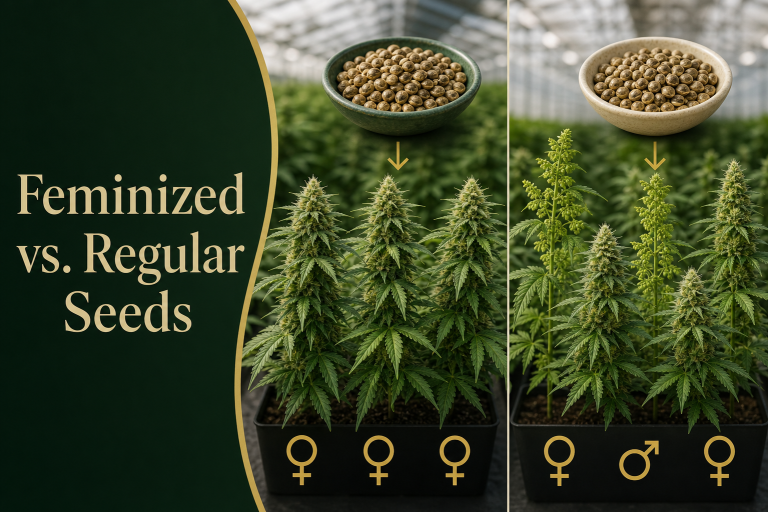
Most cannabis is dioecious, meaning male and female flowers normally occur on separate plants. Regular seed preserves that mixed-sex reproductive pathway. By contrast, feminized cannabis seeds are produced through female-to-female breeding methods intended to make female offspring much more likely.
The word regular does not tell you:
- whether the seed is photoperiod-sensitive or autoflowering;
- whether the parents were stable or closely related;
- which traits will appear in the offspring;
- the expected germination rate; or
- whether the line is suitable for your environment.
Those are separate claims that need separate evidence. The same distinction matters with F1 hybrid seeds: F1 describes a generation, while regular describes the expected sex mix.
Why Growers and Breeders Choose Regular Seeds
Regular seeds are most useful when male plants are part of the plan. A breeder may need males to evaluate pollen parents, make controlled crosses, maintain a dioecious population, or preserve genetic material without repeatedly using sex-reversal methods. Open populations can also retain more reproductive options than a narrow female-only workflow, although the actual diversity depends on the number and relatedness of the parents.
The Utah State University Extension overview of cannabis production explains the crop’s usual dioecious behavior and the different planning demands of seed and clonal production. That biology is the reason regular seed belongs in some programs and creates avoidable work in others.
When Regular Seeds Are a Poor Fit
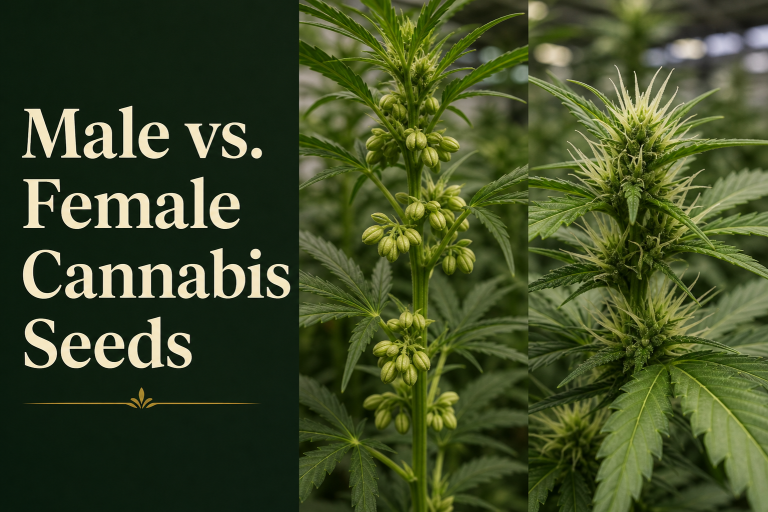
If your only goal is a flower-producing female canopy, regular seed usually requires more germination space, more early plant care, and a reliable plan for identifying and removing males before pollen is released. The guide to male and female cannabis seeds explains why shell color, size, or markings can’t solve that task in advance.
Regular seeds may also be a poor fit when:
- plant-count limits leave little room for non-target plants;
- the grower can’t isolate pollen-producing plants;
- space and inputs are budgeted for a fixed female count; or
- the seller provides no useful pedigree or population information.
Always confirm the rules that apply where you live before germinating or cultivating cannabis. A seed label doesn’t determine whether possession or cultivation is lawful in a particular jurisdiction.
How Many Regular Seeds Should You Start?
Don’t assume an exact 50:50 outcome in a small packet. Sex ratios are probabilities expressed across populations, so a small grow can land above or below the expected average. Start by defining the number of female plants you need, then work backward with room for germination losses, non-target sex, and normal biological variation. The site’s guide to deciding how many cannabis seeds to plant provides the broader planning method.
A Five-Question Buying Decision
- Do you need males? If not, regular seed may add work without adding value.
- Can you identify and isolate sex in time? The answer changes the pollen risk.
- How many final females do you need? Build a range, not a single-number assumption.
- What does the breeder document? Look for parentage, population size, selection goals, and observed variation.
- Does the line fit your conditions? Sex type doesn’t predict flowering time, size, resistance, or chemistry.
The Useful Way to Read “Regular”
Read regular as a reproductive-planning label. It tells you to expect male and female possibilities, but it doesn’t certify quality, stability, vigor, or suitability. If males serve a real purpose and you can manage the population, regular seeds can be the right tool. If they don’t, choose a seed type that matches the crop you actually intend to run.