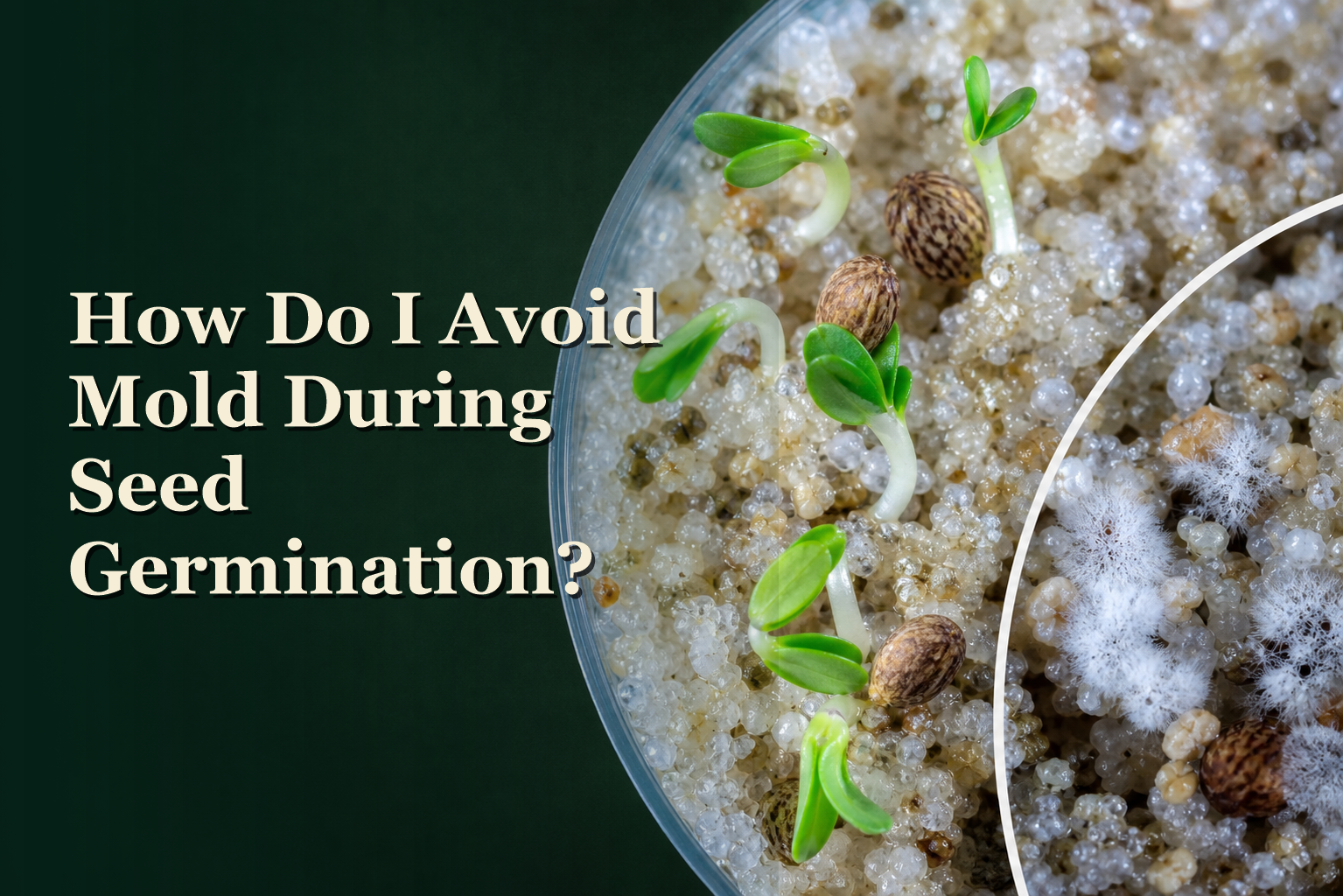
You can avoid mold during cannabis seed germination [g] by keeping your materials clean, controlling moisture, letting in fresh air regularly, and keeping the temperature moderate. Your germination medium [g] should stay damp enough for the seeds to absorb water, but it should never remain saturated or stagnant.
First, Confirm What You're Seeing
Fine white hairs confined to an emerging root can be normal root hairs, especially when the root otherwise looks firm and healthy. Mold is more likely to spread across the shell or medium in an irregular web and may appear with soft tissue, slime, discoloration, or an unpleasant odor.
Use magnification and look at where the growth begins before you react. Treating a healthy root as contamination creates its own risk because every extra touch can damage the root.
Why Mold Appears
Mold spores are common in the environment. They become a problem when conditions stay warm, wet, and still for too long.
During seed germination, the biggest risk factors are:
- Paper towels or media that are soaking wet
- Dirty containers or previously damp media
- Warm conditions without temperature control
- Sealed bags or domes left closed too long
- Dead or decaying seeds left in the germination area
- Frequent handling with unwashed hands
Start Clean
Wash your hands before you handle the seeds, and clean any reusable containers with soap and water. Use fresh paper towels, starter plugs, coco, or seed-starting mix rather than material that has been sitting damp.
Label each batch so you can isolate a problem if one develops. If one seed becomes soft, slimy, foul-smelling, or visibly covered in growth, remove it so it doesn't touch the others.
Control Moisture
The medium should be evenly damp, not dripping. If water can be squeezed from it easily, it's probably too wet.
If you're germinating directly in a medium, use a container with drainage and don't keep the entire pot saturated. A young taproot uses only a small area, so large volumes of wet medium can remain oxygen-poor for too long.
Provide Air Exchange
Humidity domes [g] and sealed containers slow drying, but they also trap moisture. Open them briefly to let in fresh air and remove the dome once seedlings emerge and can tolerate room conditions.
Airflow should be gentle. A strong fan can dry the surface quickly or stress a new seedling [g], while completely still air encourages condensation.
Keep Temperature Moderate
Warmth supports germination, but hotter isn't better. Excessive heat accelerates microbial growth and can damage the seed. If you're using a heat mat [g], monitor the medium directly and follow the site's seedling heat mat guide.
If Mold Appears
Remove any affected disposable material, improve air exchange, and correct excess moisture. Don't scrape mold from a badly affected seed and return it to the same environment.
Work through the cause in this order:
- Stop handling the other seeds unnecessarily.
- Check whether the medium is saturated or the container is holding heavy condensation.
- Remove a clearly decaying seed or contaminated disposable material without letting it touch the rest of the batch.
- Replace dirty material, restore gentle air exchange, and recheck the actual medium temperature.
- Watch the unaffected seeds before adding treatments that may create new stress.
Visible mold is not the only moisture-related problem. Damping-off guidance from Penn State Extension explains that fungi can rot a seed before emergence or damage a new seedling near the soil line, particularly when moisture and temperature favor the pathogen.
Mold during germination is different from foliar disease on mature plants. For later crop problems, the site has separate guides on identifying and treating powdery mildew and the benefits and limits of neem oil.
Use a One-Minute Daily Check
Once a day, look for heavy condensation, spreading growth, soft or discolored tissue, and an unusual odor. Then check whether the medium is damp rather than saturated. That brief routine is more useful than repeatedly opening the container or touching the seeds. Mold prevention still comes down to clean materials, moderate warmth, balanced moisture, and enough air exchange to prevent stagnation.