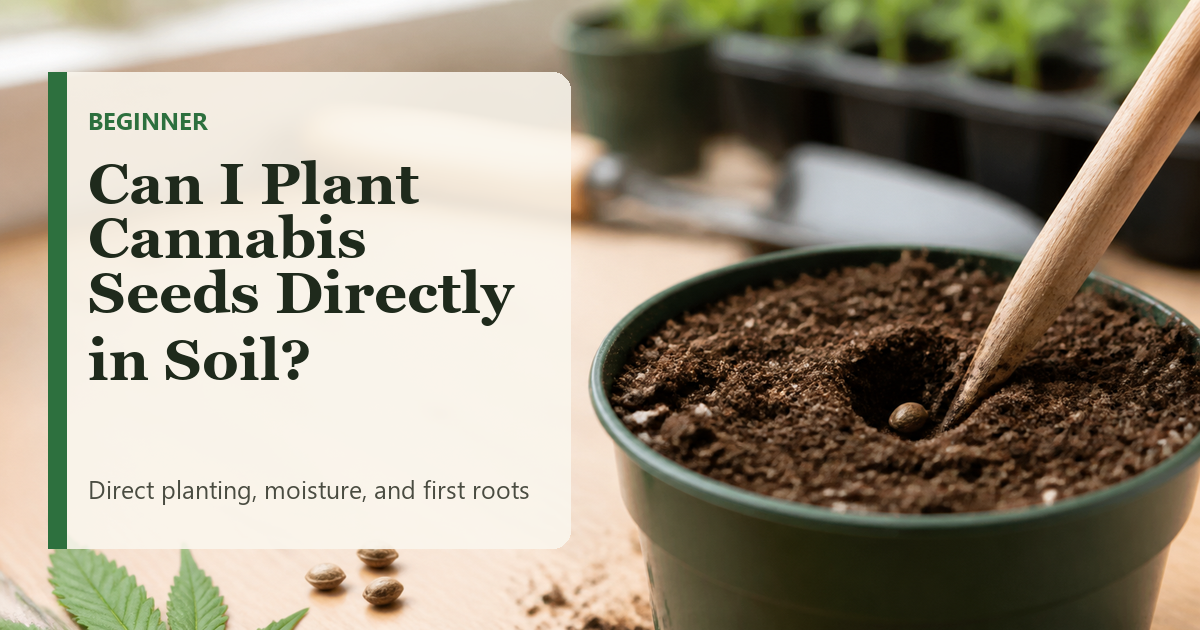
Yes, you can plant cannabis seeds directly in soil, but the method works best when the soil is light, evenly moist, warm, and gentle enough for a young taproot. Direct planting reduces handling and avoids moving a newly germinated seed, but it also gives you less visibility into what’s happening below the surface.
What Direct Planting Means
Direct planting means placing the seed straight into its starter container or final seedling medium instead of germinating it first in a paper towel, water glass, or starter plug. The seed opens in the same place where the seedling will begin early growth.
For beginners, the appeal is simple: fewer steps and less chance of damaging the taproot during transfer. The tradeoff is that you can’t watch the shell crack, so you have to trust your setup and read the soil conditions carefully.
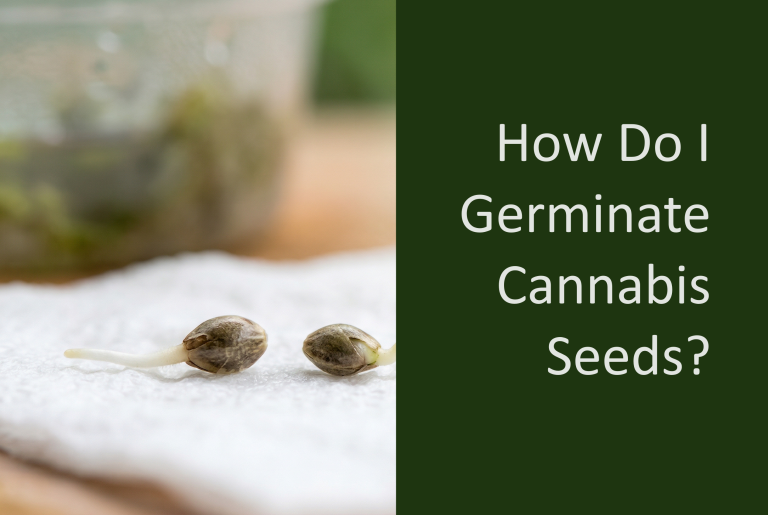
If you want to compare this method with a more visible approach, the basic cannabis seed germination process explains what the seed is trying to do before it breaks the soil surface.
When Direct Planting Works Well
Direct planting is a good option when the grower can keep the seed zone stable without overcorrecting. Seeds need moisture, oxygen, and warmth at the same time, and soil makes that balance easier in some ways but less visible in others.
It usually works best when:
- The soil is loose, clean, and not overloaded with nutrients
- The container drains well without drying out too quickly
- The room stays warm enough for germination
- The grower can keep the surface moist without soaking the pot
- The seed is fresh, mature, and likely to germinate strongly
A seed planted into dense, cold, wet soil may struggle before the grower sees anything wrong. That’s why direct planting rewards restraint more than constant attention.
Choose the Right Soil Texture
The soil should feel light and airy, not compacted. A young taproot needs to push downward and find oxygen around the seed zone. If the medium is heavy or muddy, the seed may stay too wet and short on air.
For a beginner setup, avoid hot, heavily amended mixes for the first container. A gentle seed-starting mix or light potting blend is usually safer because the seedling doesn’t need strong nutrition immediately after emergence.
Drainage matters just as much as ingredients. If your medium stays soggy after watering, fix the physical setup before blaming the seed. The article on improving soil drainage for cannabis plants is useful when soil holds water longer than expected.
How Deep Should You Plant the Seed?
Plant the seed shallowly, usually just deep enough to cover it lightly. A seed that is buried too deep has to spend more energy reaching the surface, and a seed planted too close to the top may dry out before it opens.
A practical beginner rule is to make a small hole, place the seed in gently, cover it with loose soil, and press only lightly. The goal is contact with moist soil, not compaction.
Water Before You Plant, Then Be Careful
One of the easiest direct-planting mistakes is watering too aggressively after the seed is in place. Heavy watering can push the seed deeper, compact the medium, or create a wet pocket around the seed.
A safer workflow is:
- Moisten the soil before planting so it’s evenly damp
- Let excess water drain away
- Plant the seed shallowly
- Mist or lightly dampen the surface as needed
- Keep the seed zone moist, not saturated
The surface shouldn’t crust over, but it also shouldn’t stay swampy. If you’re unsure how wet is too wet, think in terms of a damp sponge rather than a soaked towel.
Do Cannabis Seeds Need Light When Planted in Soil?
The seed itself doesn’t need strong light to crack underground, but the seedling will need gentle light soon after it emerges. That means the setup should be ready before the sprout breaks the surface.
If you’re still sorting out the difference between germination and early seedling light, the article on whether cannabis seeds need light to germinate gives helpful context without overcomplicating the decision.
What to Watch After Planting
After direct planting, patience matters. A healthy seed may still take several days to appear, and digging around to check it can damage the taproot before the plant has a chance to establish.
Watch for:
- A stable, lightly moist soil surface
- No standing water or sour smell
- Warm but not hot conditions
- A seedling hook or first leaves emerging
- No crusted soil blocking the sprout
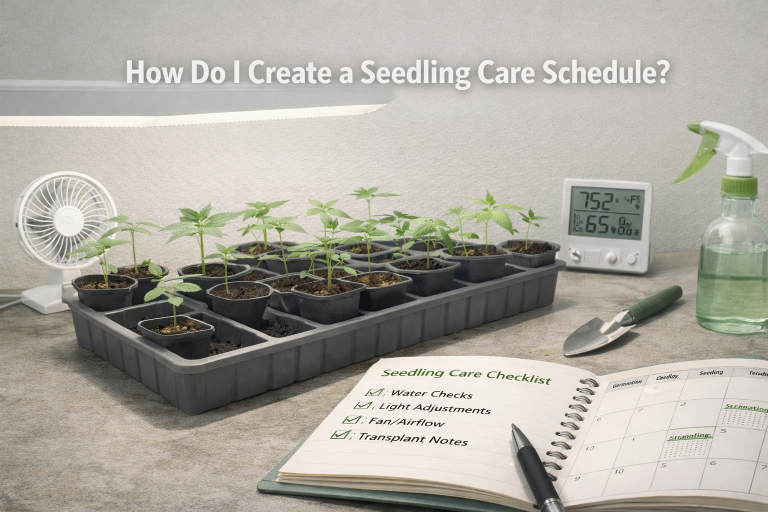
Once the seedling emerges, the job changes from germination to early care. At that point, a simple seedling care schedule can help you avoid overwatering, weak light, and rushed feeding.
Common Direct-Planting Mistakes
The method is simple, but simple doesn’t mean careless. Most problems come from burying the seed too deep, using poor soil texture, or watering as if the seedling already has a full root system.
Avoid these mistakes:
- Planting into dense or compacted soil
- Soaking the container after the seed is placed
- Using a nutrient-heavy mix that is harsh on new roots
- Digging up the seed too early
- Letting the surface dry completely during germination
- Starting in a container that is hard to water evenly
Container size also affects how forgiving the setup feels. A small starter container is easier for beginners to read, while an oversized pot can stay wet around a tiny root zone for too long. If that part is unclear, review how to choose the right pot size for cannabis seedlings before planting.
Bottom Line
Planting cannabis seeds directly in soil can work well when the medium is light, moist, warm, and easy for the seedling to move through. You can’t watch the root emerge, but careful direct planting keeps the process clean and reduces handling. For beginners, success usually comes from preparing the soil first, planting shallowly, watering gently, and resisting the urge to disturb the seed before it has time to emerge.