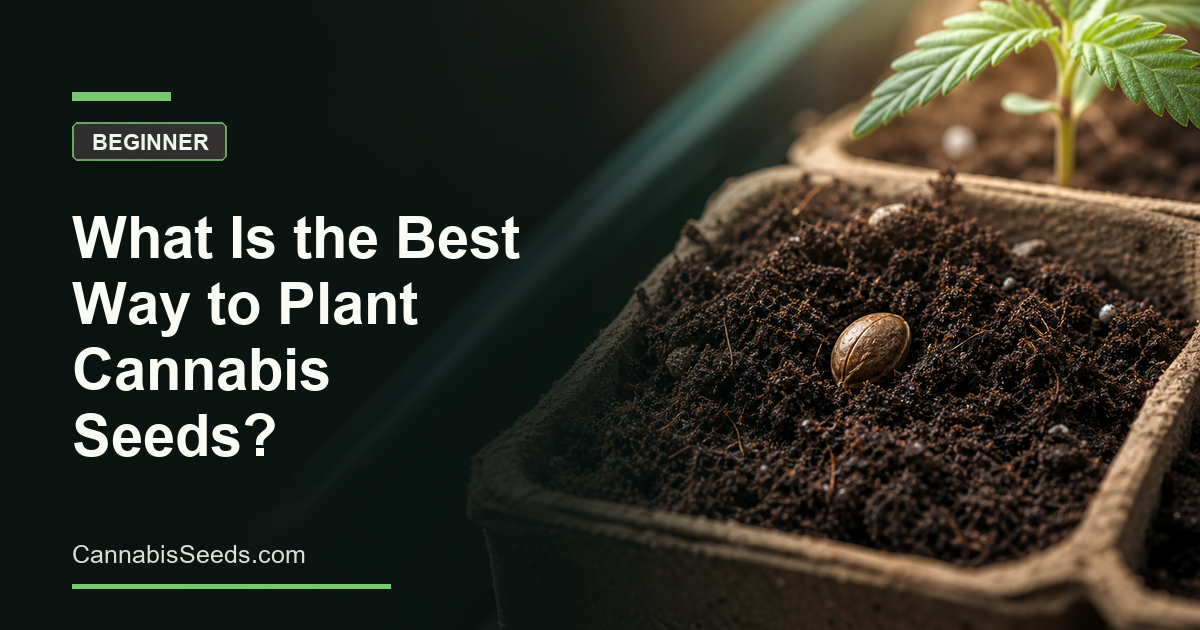
The best way to plant cannabis seeds is to use a loose, lightly moist starter medium, place each seed shallowly, and keep the seed zone warm and steady while the taproot begins to grow. It sounds simple because it is, but small details matter: deep planting, soaked soil, cold media, and too much handling can all make a healthy seed struggle before it ever reaches the surface.
Use a Starter Medium That Stays Light
A cannabis seed doesn’t need rich soil at the moment it’s planted. It needs moisture, oxygen, warmth, and a medium that lets the young root move without fighting compaction. Seed-starting mix, coco coir, peat pellets, starter plugs, and light potting mix can all work as long as they drain well and don’t stay heavy.
If you’re using soil, moisten it before planting so you don’t have to pour a lot of water over the seed afterward. If drainage has been a problem in past grows, it’s worth reviewing soil drainage for cannabis plants before blaming the seed itself.
Plant Cannabis Seeds Shallowly
Plant the seed shallow enough that the seedling has a short path to the surface. A light cover of medium is usually enough. The seed should be protected from direct light and drying air, but it shouldn’t be buried so deeply that the young shoot has to spend extra energy breaking through.
- Make a small hole in pre-moistened medium.
- Place one seed in the hole without squeezing it.
- Cover it gently with loose medium.
- Mist the surface if it starts to dry.
- Leave the seed alone while it germinates.
Should the Pointed End Face Down?
Some growers plant cannabis seeds with the pointed end down because the taproot often emerges from that area. That can help, but it isn’t worth obsessing over. A viable seed in loose medium can usually orient itself, and rough handling often creates more risk than a slightly imperfect seed angle.
Keep Moisture Even, Not Heavy
The seed zone should feel damp, not soaked. Water activates germination, but too much water can push oxygen out of the medium and encourage fungus. If you’re new to this stage, pay close attention to how often the surface dries and how heavy the container feels, because overwatering is one of the easiest early mistakes to make.
Give the Seed Stable Conditions
After planting, keep the container warm and steady. Don’t dig the seed up to check progress, and don’t move it between different environments every few hours. Cannabis seeds don’t need strong light before they break the surface, but seedlings do need gentle light soon after they emerge. That shift is explained more clearly in the guide on whether cannabis seeds need light to germinate.
Common Mistakes When Planting Seeds
- Planting too deep and making emergence harder.
- Using cold, dense, or waterlogged soil.
- Handling a cracked seed or exposed taproot too much.
- Letting the surface dry completely after planting.
- Expecting every seed to emerge on the same schedule.
If the seed hasn’t surfaced yet, don’t assume something is wrong right away. Germination timing changes with seed age, storage history, temperature, and moisture. For a realistic window, compare your setup with how long cannabis seeds take to germinate.
What to Do After the Seedling Emerges
Once the seedling breaks the surface, the job changes. Keep the medium lightly moist, introduce gentle light, and avoid feeding heavily while the plant is still small. At that point, you’re no longer just planting a seed; you’re managing early seedling care, and a simple seedling care schedule can help keep those first few days calm and consistent.
1 response