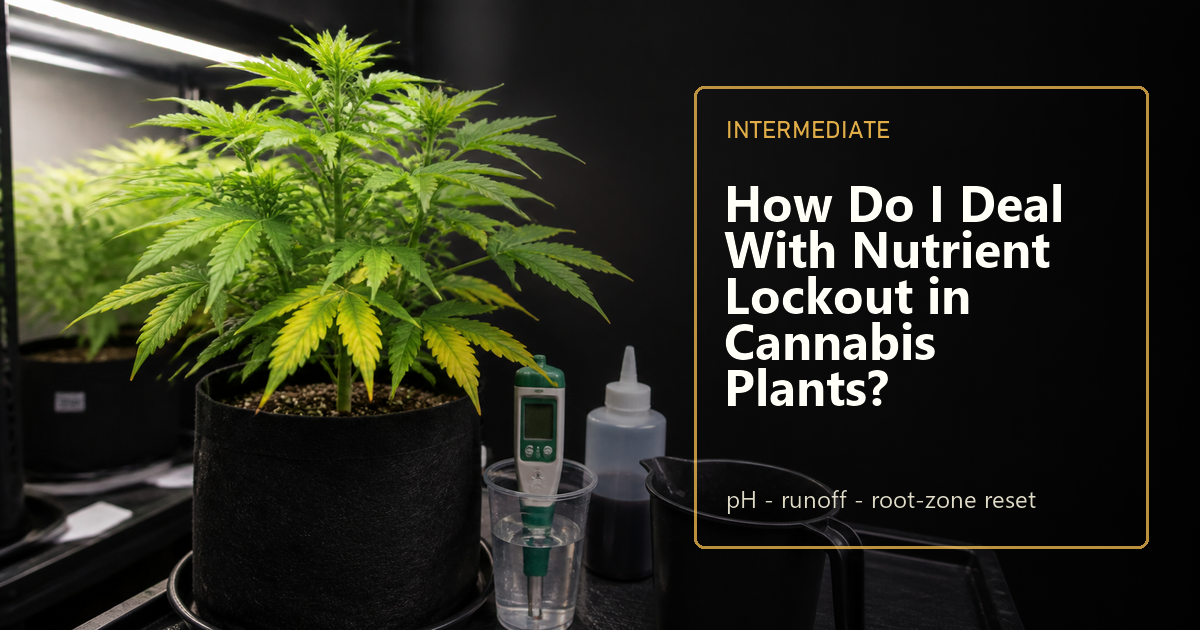
To deal with nutrient lockout in cannabis plants, first stop adding more fertilizer, check the root-zone conditions, confirm pH and moisture behavior, and then reset the plant gradually. Lockout usually means nutrients are present but the plant can’t absorb them properly, so the fix starts with the root zone rather than a stronger feed.
What Is Nutrient Lockout?
Nutrient lockout happens when a cannabis plant can’t take up one or more nutrients even though those nutrients may already be in the growing medium. The issue is often tied to pH imbalance, salt buildup, overfeeding, poor watering habits, root stress, or a combination of those problems.
That’s why lockout can be confusing. The plant may look deficient, but adding more nutrients can make the problem worse if the root zone is already overloaded or out of range.
Signs That Point Toward Lockout
Lockout can resemble a normal deficiency, so you need to look at the whole situation instead of reacting to one leaf symptom. A plant that suddenly shows multiple nutrient symptoms after heavy feeding, pH drift, or watering problems is more likely to be dealing with uptake trouble.
Common clues include:
- Yellowing, spotting, or burned leaf edges that don’t improve after feeding
- Multiple deficiency-like symptoms appearing at the same time
- Dark, overly green growth paired with tip burn
- Slow growth even though the plant has been fed
- Runoff or root-zone pH that is outside the expected range
- Wet, compacted, or poorly aerated soil around the roots
It also helps to compare the plant against broader growth signals. If you’re unsure whether the whole plant is actually declining, review the signs of a healthy cannabis plant before making a major correction.
Start by Pausing the Feed
When lockout is possible, the first move is usually to stop adding more nutrients until you understand the root-zone problem. More fertilizer is tempting because the leaves may look deficient, but it can increase salt buildup and push the plant further out of balance.
Give yourself a short diagnostic window. Check what was fed, how often the plant was watered, whether the medium has been drying properly, and whether the pH has been measured accurately. The goal is to separate a true shortage from a blocked uptake situation.
Check pH Before You Chase Deficiencies
For many growers, pH is the fastest clue. If the root zone drifts outside the plant’s preferred range, certain nutrients become less available even when they’re physically present in the medium.
Use a reliable meter or test method, and avoid making decisions from a single questionable reading. If soil is involved, the guide on measuring soil pH for cannabis plants explains how to get a more useful reading instead of guessing from symptoms alone.
Once you know the pH direction, adjust gradually. Sudden swings can stress the plant further, especially if the roots are already under pressure.
Look at Watering and Drainage
Root-zone oxygen matters. A plant sitting in wet, compacted, or poorly drained media can show uptake problems even when nutrition and pH look reasonable on paper.
Ask a few practical questions:
- Does the container dry down at a normal pace?
- Does water move through the medium evenly?
- Are roots sitting in a wet lower layer?
- Has the plant been watered before it was ready?
- Does the medium smell sour or stale?
If drainage is part of the problem, correcting feed strength will not be enough. The article on soil drainage for cannabis plants is a useful next step when the medium itself seems to be creating the lockout pattern.
Decide Whether a Flush Is Needed
A flush can help when salt buildup or excess nutrients are likely, but it should not be used casually. Flushing a plant that is already overwatered or sitting in poor drainage can create a new problem while trying to solve the old one.
Consider a careful flush when:
- The plant has been heavily fed
- Runoff readings suggest buildup
- Leaf tips are burned while deficiency-like symptoms continue
- pH correction alone is not enough
- The medium drains well enough to handle the reset
After flushing, do not jump straight back to full-strength nutrients. Let the plant stabilize, then resume feeding at a lighter level with a cleaner plan.
Reset Feeding Gradually
Once pH, moisture, and drainage are under control, feeding can restart carefully. A plant recovering from lockout needs a stable root zone more than an aggressive correction.
A practical reset usually looks like this:
- Remove the obvious stressor, such as excess salts, poor pH, or saturated media
- Give the plant time to show fresh growth response
- Resume feeding at a reduced strength
- Watch new growth instead of expecting damaged leaves to repair
- Adjust one variable at a time
Old damaged leaves may not recover, so judge progress by newer growth, posture, and overall vigor. If every response is measured against already-damaged leaves, it is easy to overcorrect.
Preventing Nutrient Lockout
Prevention is mostly about consistency. Cannabis plants can handle a lot when their root zone is stable, but frequent swings in feed strength, pH, wetness, and environmental demand make uptake problems more likely.
Strong prevention habits include:
- Keeping pH in a reasonable range for the medium
- Feeding according to plant stage and response, not just a schedule
- Avoiding repeated heavy feeding without runoff awareness
- Letting containers dry appropriately between waterings
- Keeping the medium aerated and structurally healthy
- Tracking changes so problems have a visible history
Living and biologically active media can also buffer some nutrient behavior when managed well. If you’re moving toward that style of growing, the article on living soil in cannabis growing gives useful context for a more biologically supported nutrient system.
Common Mistakes
The biggest mistake is treating every symptom as a deficiency. Lockout often looks like the plant is asking for more, but the real issue is that the roots can’t use what’s already there.
Avoid:
- Adding stronger nutrients before checking pH
- Flushing without considering drainage
- Changing pH, feed strength, and watering habits all at once
- Judging recovery only by damaged old leaves
- Ignoring root-zone temperature or oxygen
- Assuming one leaf symptom tells the whole story
Key Takeaways
Nutrient lockout is a root-zone problem before it is a feeding problem. Pause the feed, check pH, review watering and drainage, remove excess buildup only when needed, and then restart nutrition gradually. The plant will usually tell you whether the reset is working through healthier new growth, steadier posture, and fewer new symptoms.
2 responses