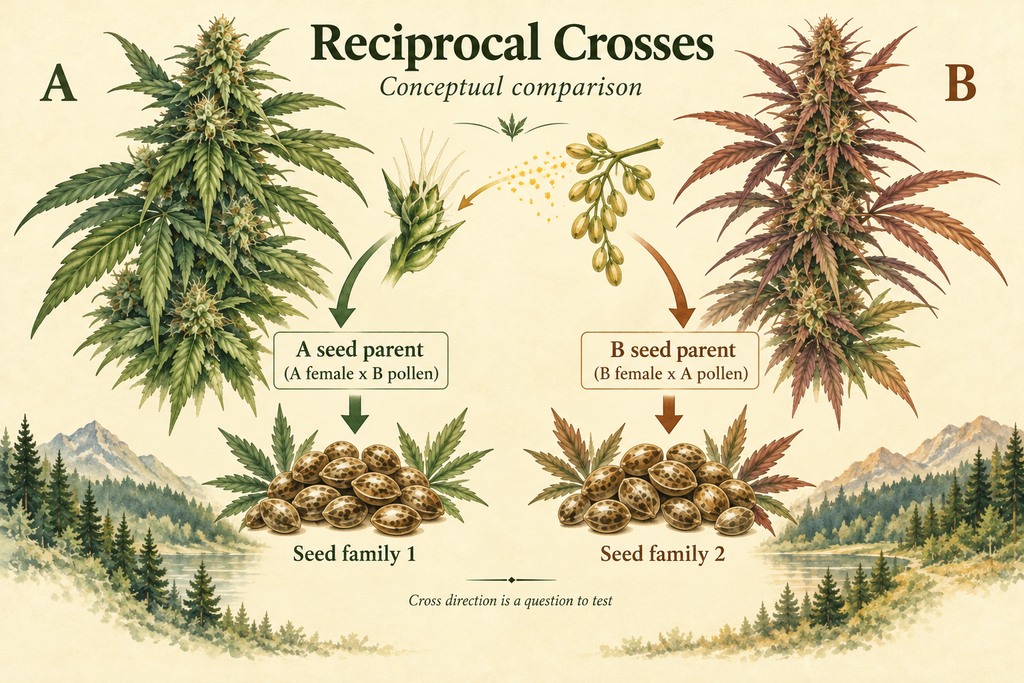
A reciprocal cross compares the same parental materials in opposite reproductive roles: A as the seed parent with B providing pollen, then B as the seed parent with A providing pollen. In cannabis breeding, it can help investigate effects of cross direction. Because cannabis is often dioecious, you must first establish whether those reciprocal roles are biologically feasible and whether the materials are genuinely comparable.
What Counts as the Same Parents?
With plants that can serve in both roles, an exact reciprocal comparison can use the same genotypes. With dioecious cannabis, an ordinary female and male pair can’t simply exchange roles. A design may instead compare parental lines represented by different plants, but that introduces genetic differences within each line.
Label that as a line-level comparison and document the individuals used. Reproductive manipulation can create further confounding and belongs under specialist oversight; this article explains the experiment, not a chemical sex-reversal procedure.
Why Cross Direction Might Matter
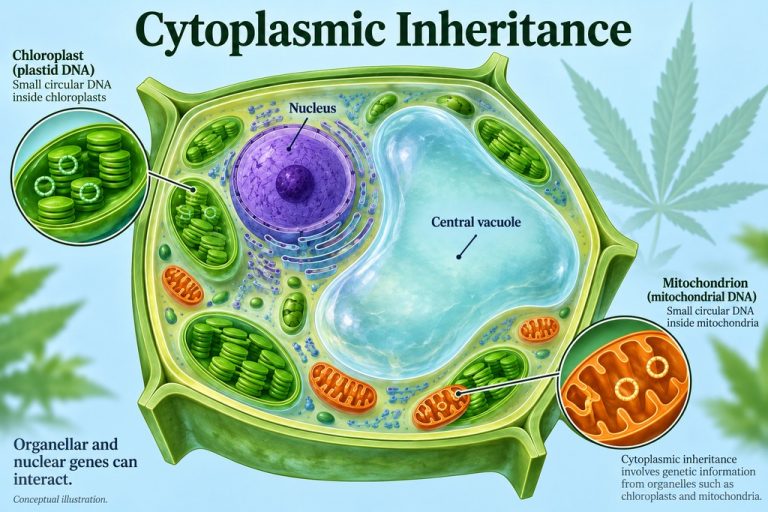
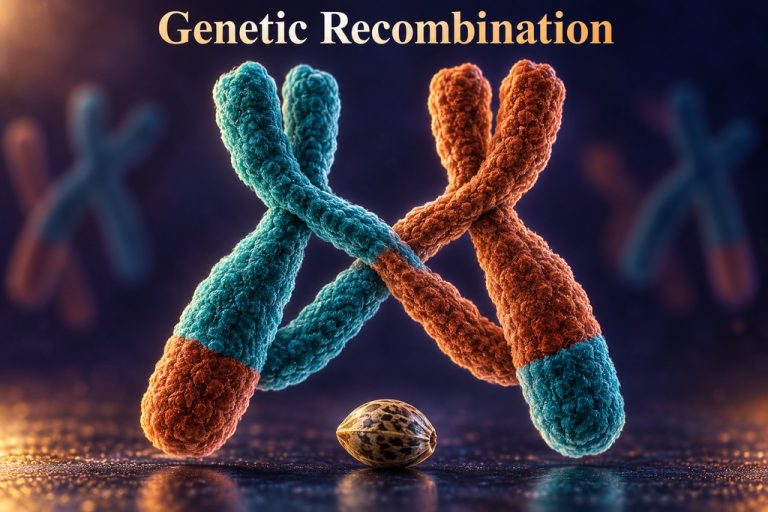
The embryo receives nuclear genetic material from both parents, but the seed develops on the seed parent. Seed provisioning, maternal tissue, and inherited organelles can contribute differently to offspring outcomes. Parent-of-origin and sex-linked effects may also complicate interpretation.
A cannabis cannabinoid-inheritance study found evidence consistent with maternal and cytoplasmic contributions in its analyzed material. The finding supports investigating cross direction, but it doesn’t tell you which seed parent is preferable in another pairing.
Maternal effects and cytoplasmic inheritance aren’t synonyms. A seed parent’s growing conditions can affect seed development without changing the offspring’s inherited organellar DNA.
Choose the Outcome Before Comparing Directions
Before setting up reciprocal crosses, write down the outcome you want to test. Germination performance, seedling vigor, flowering time, and chemical composition require different measurements and may need different observation periods.
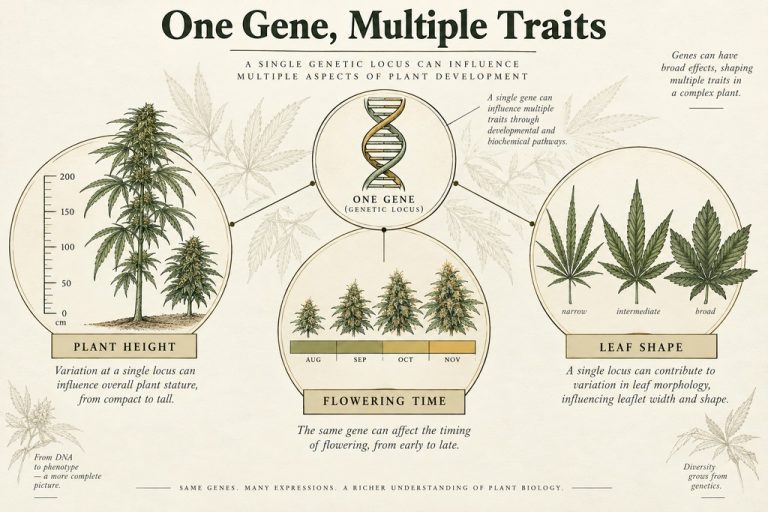
For example, a hypothetical difference in early seedling size could reflect seed provisioning. It wouldn’t establish a permanent adult growth advantage or an organellar cause. The article on genotype and phenotype explains why observing a difference and identifying its inherited cause are separate jobs.
How to Make the Comparison Informative
- Define the parental materials. Record genotype, line, individual identity, reproductive role, and any manipulation. State whether the comparison is exact or line-level.
- Use replicated parental representatives where feasible. One seed-producing plant per direction can confound cross direction with that plant’s condition.
- Keep seed-production conditions comparable. Document pollination timing, plant condition, maturity at collection, and handling.
- Verify parentage. Retain isolation records and appropriate genetic checks so contamination doesn’t become a direction effect.
- Standardize storage and offspring evaluation. Randomize placement, use comparable measurement stages, and retain seed-lot identity.
- Analyze direction alongside other factors. Include family, seed lot, and environment where the design allows, with a qualified breeder or geneticist choosing the model.
Adding more offspring won’t fix a comparison with one uncontrolled seed lot on each side. If direction and production batch are inseparable, report that limitation rather than treating many offspring as independent replications of the cross.
What a Difference Actually Establishes
A reproducible difference can establish that the two directions performed differently under the tested design. It doesn’t, on its own, identify a particular organelle, maternal gene, or biochemical mechanism.
If the difference changes across growing conditions, investigate genotype-by-environment interaction. If genotype proportions differ, revisit the inheritance model and assay evidence before attributing a phenotype difference to cross direction.
When the Result Can Guide a Breeding Decision
Keep the results for each direction alongside the exact parents, seed-production conditions, offspring measurements, uncertainty, and anything the trial couldn’t separate. That can support choosing a production direction for the tested material, while a mechanistic claim may require additional crosses and molecular evidence.
For your pairing, ask whether cross direction changes the outcome you measured under comparable conditions and, if so, whether that change helps your breeding objective. Keep the conclusion tied to the tested parents and conditions so another trial can check it.