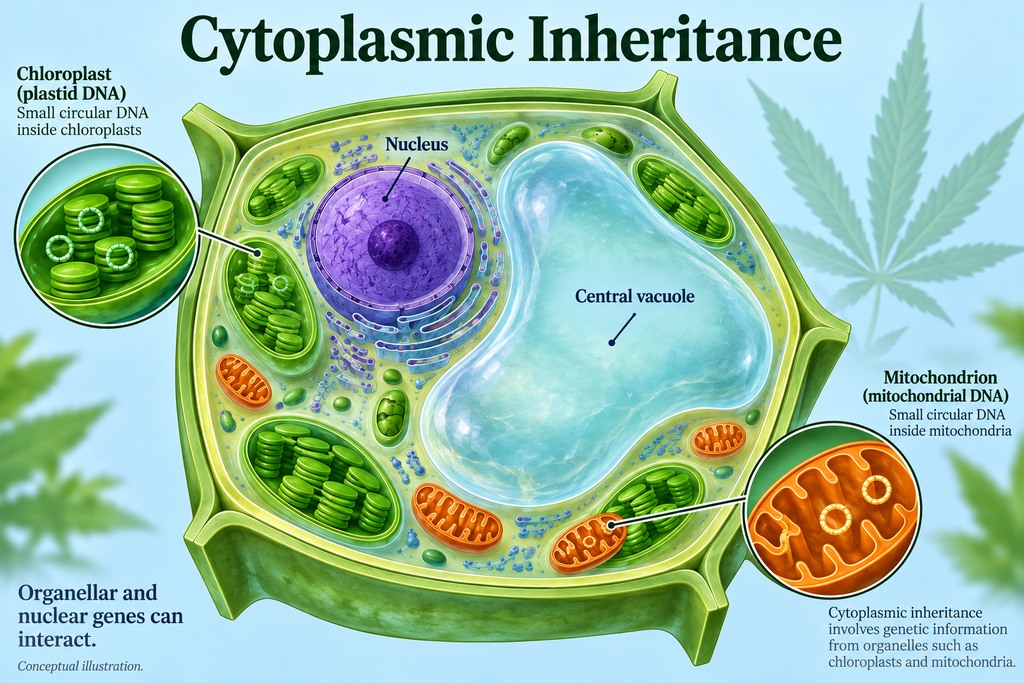
Cytoplasmic inheritance is the transmission of genetic information outside the nucleus, especially DNA in mitochondria and chloroplasts. In cannabis genetics, it raises questions about whether inherited organelles contribute to offspring traits. It should be kept separate from maternal effects caused by seed provisioning or the seed parent’s environment, and a cross-direction difference alone doesn’t prove an organellar cause.
The Nucleus Isn’t the Only Place With DNA
Mitochondria and chloroplasts have their own genomes. Those genomes can influence cellular functions and interact with nuclear genes. A Plant Physiology review of cytoplasmic inheritance describes predominantly maternal transmission in many plants, alongside paternal and biparental patterns and exceptions.
You can’t assume that general plant pattern holds for every cannabis pairing. A specific claim about transmission needs observations or molecular evidence from the material in question.
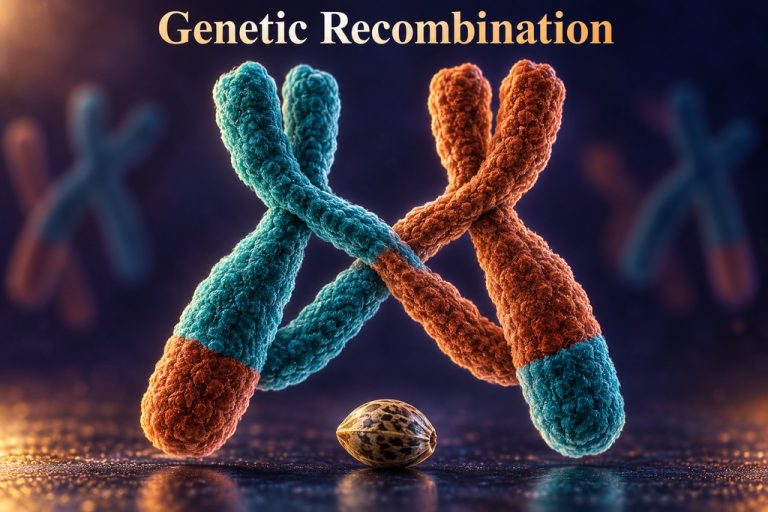
The important distinction is between nuclear inheritance and organellar DNA transmission. A result from a nuclear marker doesn’t establish which chloroplast or mitochondrial variant an offspring inherited.
Why a Maternal Pattern Can Be Misleading
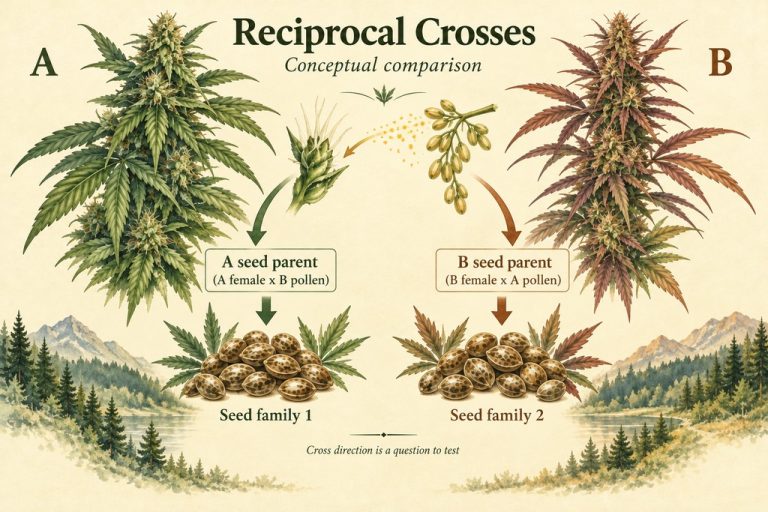
A seed develops on the seed parent, so its initial condition can reflect maternal nutrition, maturation, seed tissues, and handling. These maternal effects can produce differences among offspring even when no relevant organellar variant explains them.
Suppose seedlings from one direction of a hypothetical cross emerge larger. If the seed lots differ in maturity or storage, the comparison can’t isolate cytoplasmic inheritance. Even after those conditions are controlled, other parent-of-origin or genetic differences may remain.
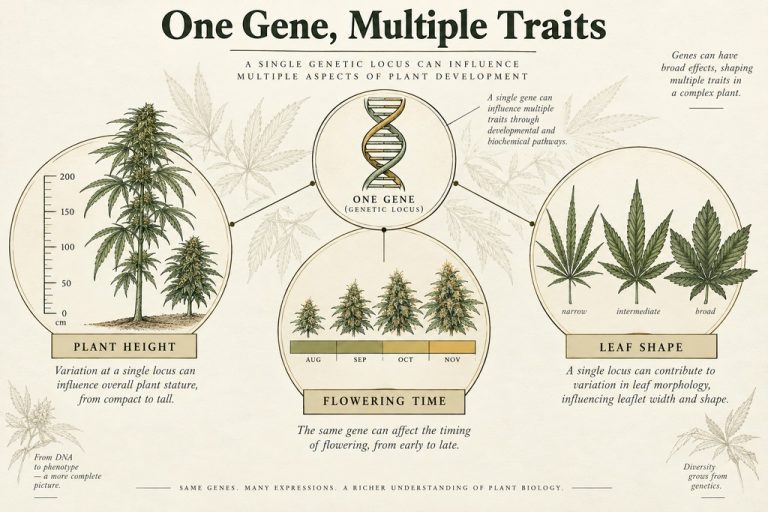
The article on genotype versus phenotype provides the broader distinction: observing a difference doesn’t tell you whether its cause lies in nuclear DNA, organellar DNA, or the conditions the plants experienced.
What Has Been Studied in Cannabis?
Campbell and colleagues’ cannabinoid-inheritance analysis reported model evidence suggesting cytoplasmic contributions to CBD concentration and maternal contributions to CBC expression in the data they examined. The authors also called for further research on environmental sensitivity.
This is evidence of possible contributions in particular analyzed material, not identification of a universal organellar switch or proof that choosing a certain seed parent guarantees a cannabinoid profile. The statistical analysis can point to an effect worth testing without establishing whether an organellar variant caused it.
How to Evaluate an Organellar Claim
Ask three connected questions. Was cross direction tested with comparable parental materials? Was organellar transmission measured? And did the proposed organellar difference explain the phenotype after credible alternatives were considered?
- Cross record: exact individuals or lines, reproductive roles, parentage, and production conditions.
- Organelle record: which mitochondrial or chloroplast regions were measured, assay quality, inherited haplotypes, and any mixed variants.
- Phenotype record: trait definition, tissue, developmental stage, measurement method, and uncertainty.
- Alternative explanations: seed condition, nuclear background, environment, family structure, and parent-of-origin effects.
- Replication: independent families or generations appropriate to the proposed mechanism.
Mixed organellar variants within an individual are called heteroplasmy. If that possibility matters to the assay, a simple single-haplotype label may not capture the full state; ask the laboratory what its method can detect.
What Follow-Up Can Clarify
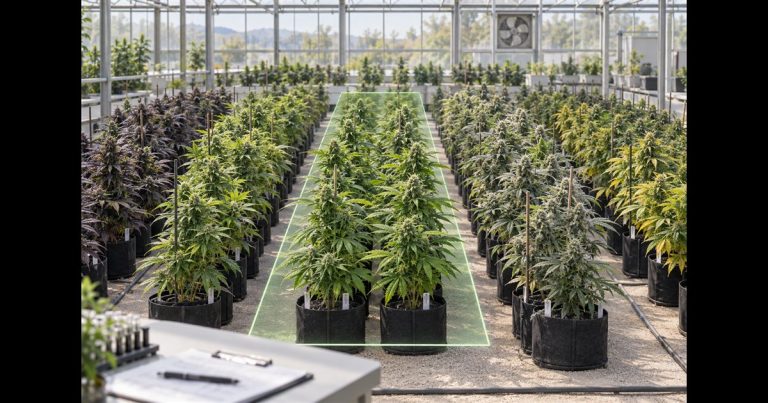
A specialist may propose reciprocal comparisons, organellar genotyping, or crosses that vary nuclear background while retaining a documented cytoplasmic background. These require a careful design, because nuclear-cytoplasmic interactions can make an effect background-specific.
Use the Mendelian inheritance article for the nuclear starting model, but don’t force organellar transmission into an ordinary nuclear Punnett square. If performance shifts across conditions, genotype-by-environment interaction is another explanation the trial should address.
What to Record Before Changing a Breeding Decision
When you report an organellar effect, identify the organelle, the variation measured, how it was transmitted, the nuclear backgrounds tested, and the evidence connecting it to the trait. If only a maternal pattern was observed, say that instead of naming an organellar mechanism.
Before changing a breeding decision, have a plant geneticist review the transmission and phenotype data together. Ask which observation is still missing: evidence of organellar transmission, a comparable seed lot, or a test in another nuclear background. That answer tells you what to investigate before attributing the trait to cytoplasmic inheritance.