 Advanced
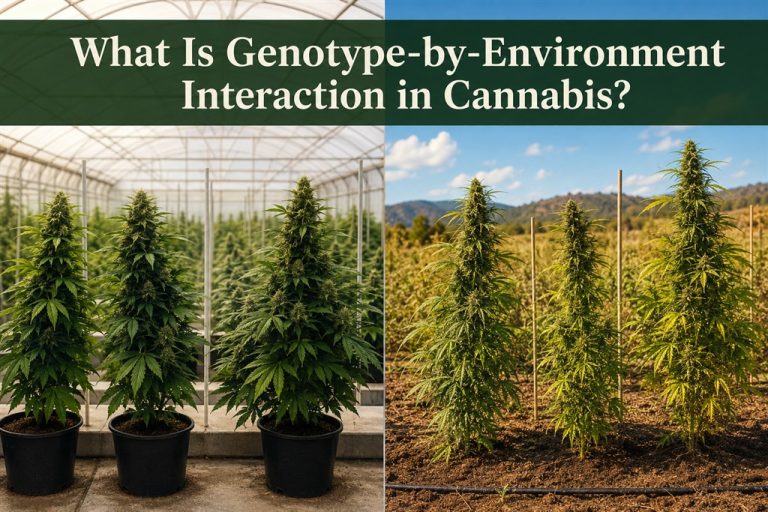
What Is Genotype-by-Environment Interaction in Cannabis?
Genotype-by-environment interaction occurs when cannabis genotypes respond differently across conditions, changing the size or rank of performance differences.
Read articleResearch collection
Articles explaining inherited cannabis traits, genetic variation, chemotypes, breeding decisions, and the limits of predicting plants from seeds.
Advanced
Genotype-by-environment interaction occurs when cannabis genotypes respond differently across conditions, changing the size or rank of performance differences.
Read article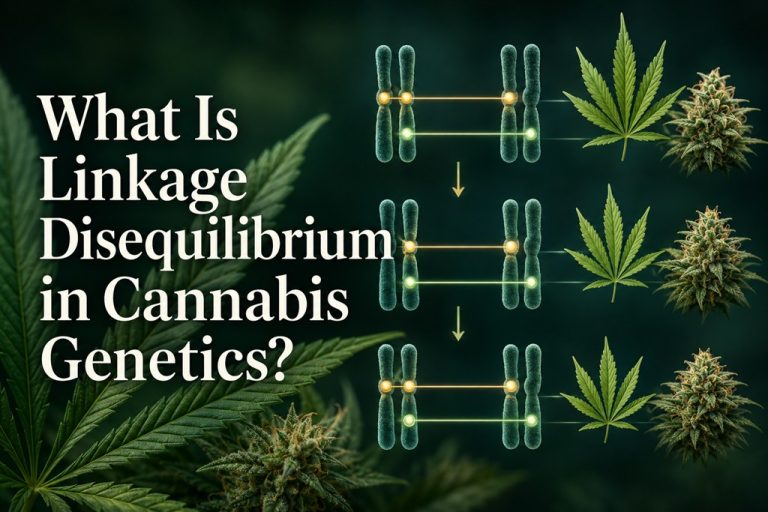 Advanced
Linkage disequilibrium is a population-specific association between alleles. Learn why it helps map cannabis traits without proving that…
Read article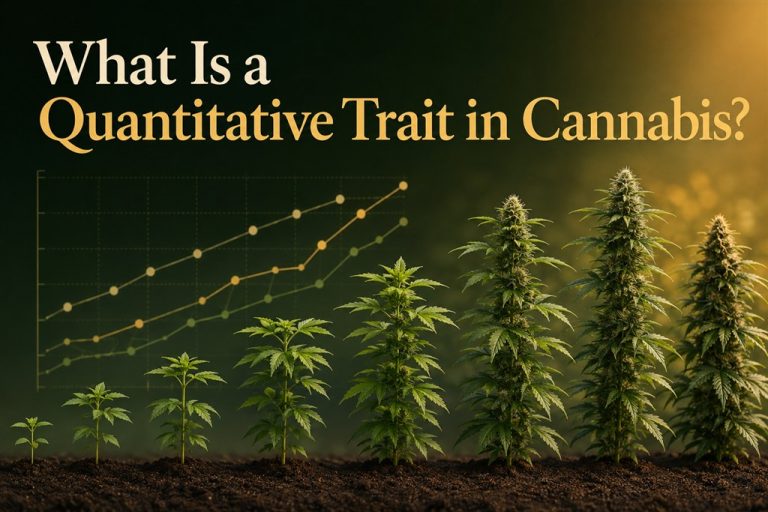 Advanced
A quantitative cannabis trait varies across a measurable range and reflects multiple genetic and environmental effects. Learn how…
Read article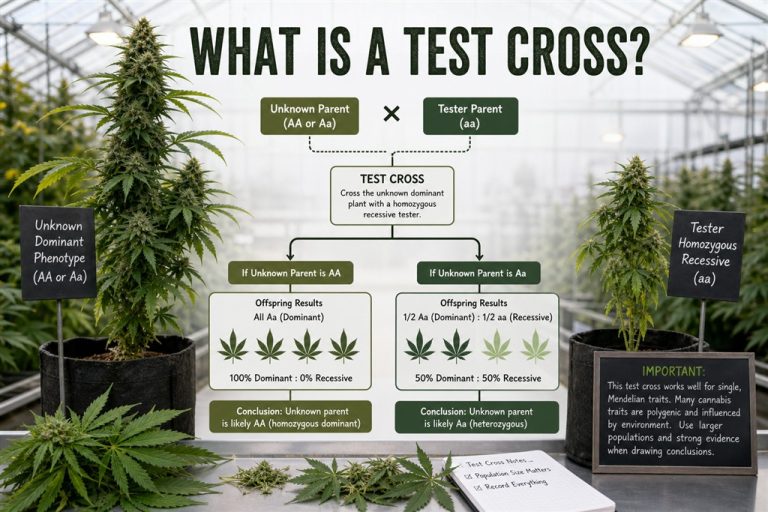 Advanced
A test cross uses a known tester to narrow uncertainty about an unknown parent's genotype. Learn the classic…
Read article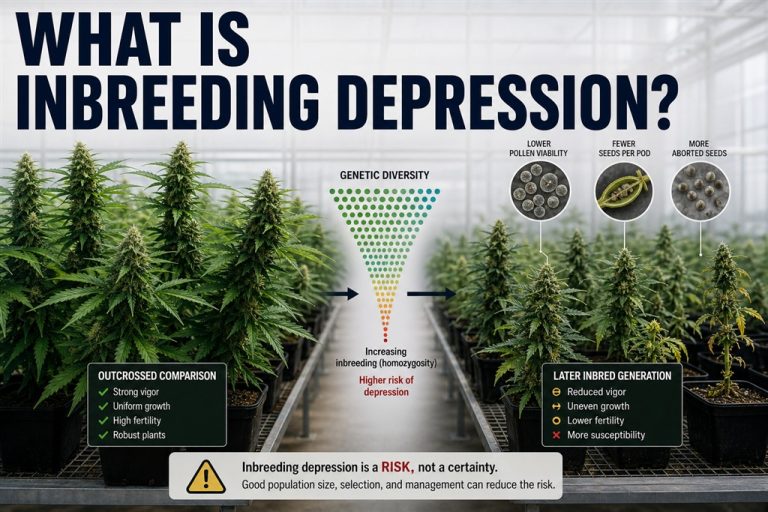 Advanced
Inbreeding depression is a decline in vigor, fertility, or other fitness traits that can appear as homozygosity rises.…
Read article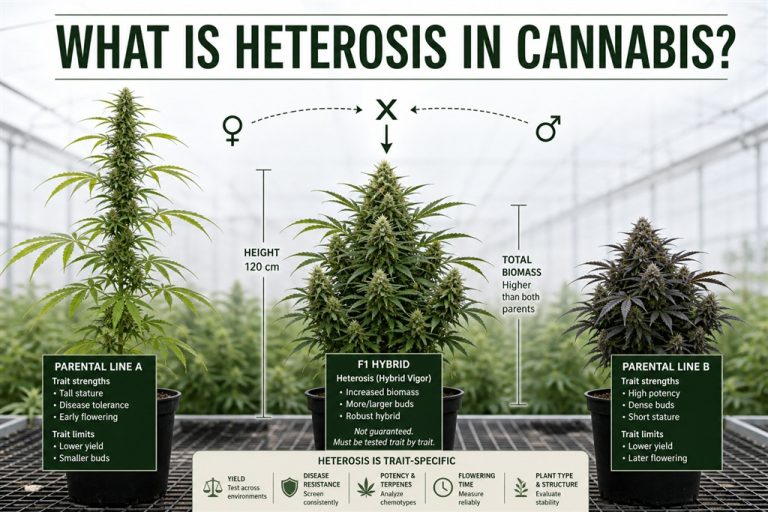 Advanced
Heterosis is improved F1 performance relative to its parents for a measured trait. Learn how hybrid vigor is…
Read article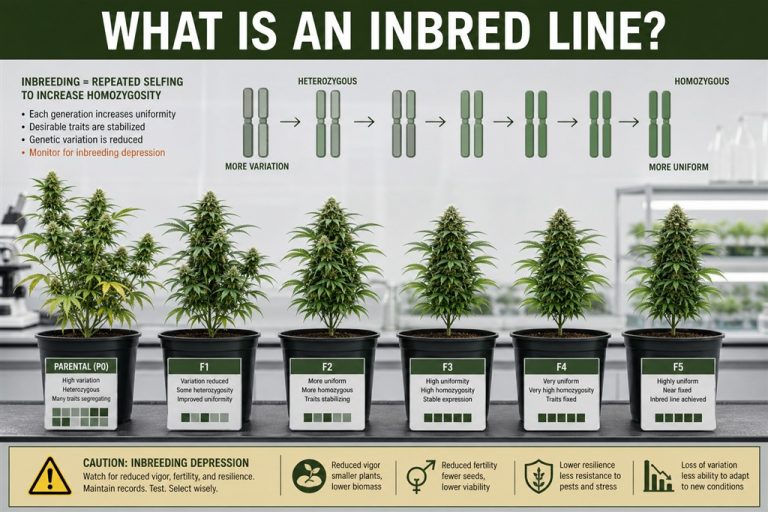 Advanced
An inbred cannabis line is developed through repeated close mating to increase homozygosity and inheritance consistency. Learn what…
Read article Advanced
Marker-assisted selection uses validated DNA markers to help choose cannabis breeding plants. It can improve efficiency, but it…
Read article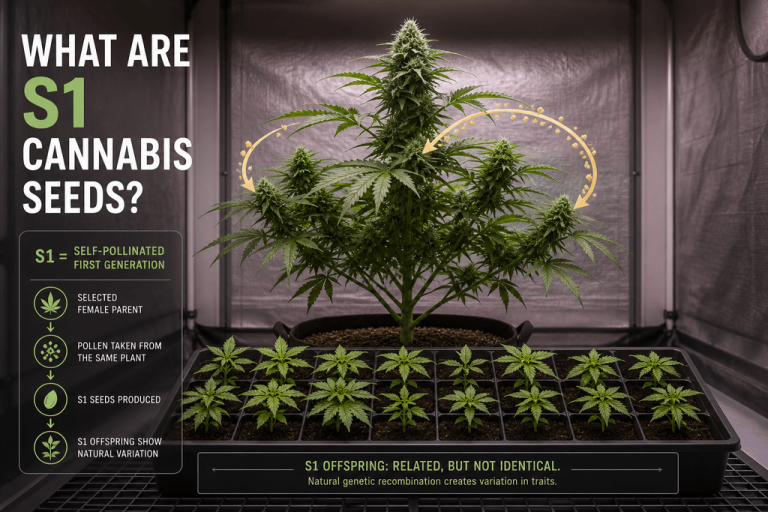 Advanced
S1 cannabis seeds are first-generation selfed offspring from one selected genotype. They can expose and fix alleles, but…
Read article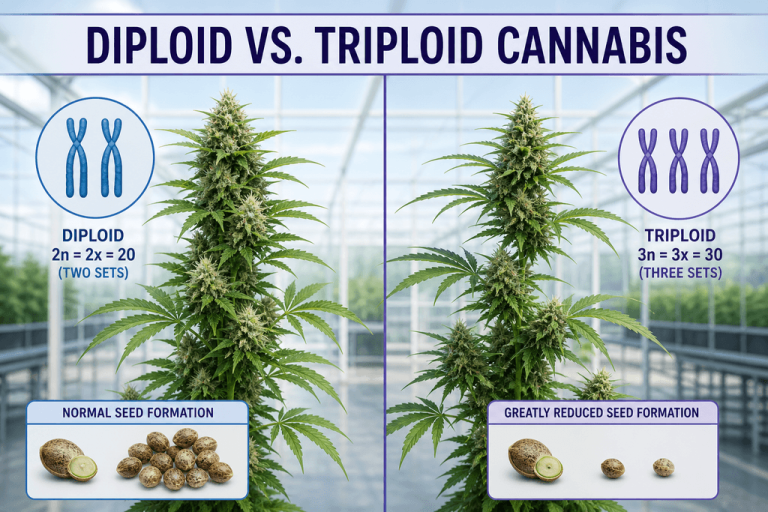 Advanced
Diploid cannabis has two chromosome sets, while triploid cannabis has three and is usually far less fertile. Reduced…
Read article